


Digital Breakthroughs: How the Seminole County Sheriff’s Office Uses Cellebrite Solutions to Extract Hard Evidence and Build Trust
The advances in digital forensics and its rapid adoption by law enforcement agencies over the last few decades underscore its importance in both investigating and prosecuting crimes in the digital age.
A single data point can be a breakthrough in a case and with the right evidence, be it a text file, picture or video, investigators can help advance justice in court. Yet they need the right solutions to extract and analyze digital evidence.
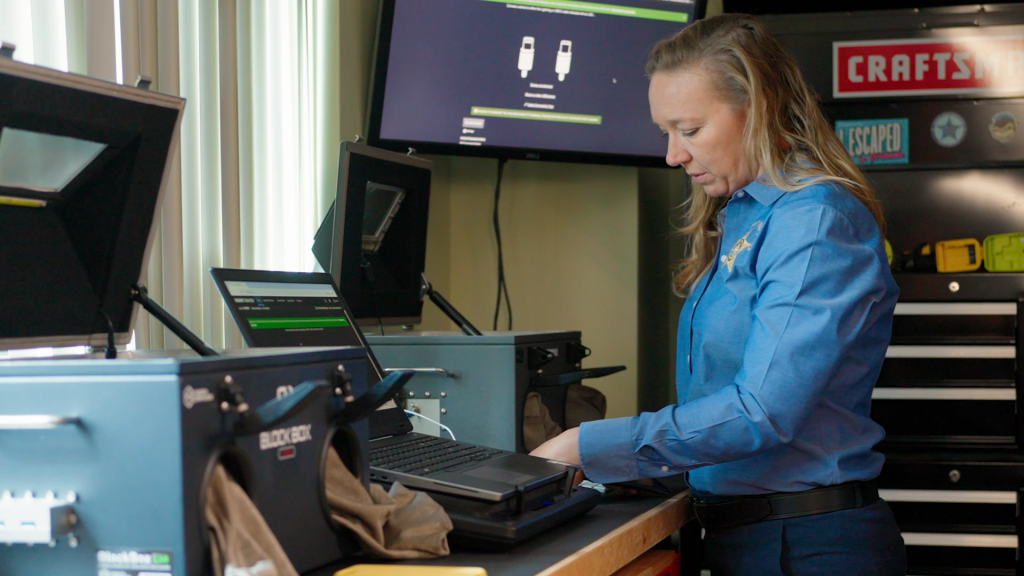
Successful investigators such as Detective Geraldine Blay and Sgt. Christie Register, of the Seminole County Sheriff’s Office, use digital forensics solutions for the extraction, analysis and sharing of the digital evidence.
The Age of Silicon
 Geraldine started her career in 2001 investigating financial crimes. As her work took off with the start of the new Millennium, she experienced the irreversible advance of technology. “It was one examiner and one station. And it just started from there,” she recalls. “They started getting more—more and more cases, more and more phones, more and more computers.”
The rise of smart devices, social media, live streaming and the internet of things, law enforcement has no choice but to leverage the power of digital forensics—an indispensable discipline in the age of silicon.
Surfacing Missing Evidence with Cellebrite
In one case involving a 7-year-old and her abusive biological mother and stepfather, Geraldine’s team used digital forensics to find conclusive evidence of their crimes.
At first, the prosecution was only able to charge the girl’s mother, as the stepfather’s devices were wiped of evidence and his laptop ended up in a bucket of water. He shared an Apple ID with the girl’s mother so the stepfather’s attorneys argued that any evidence on the phone had been planted by the mother. Despite the prolonged direct exposure to water, Geraldine and her team were able to find the evidence needed.
“They submerged the laptop into a bucket of water, and it was there for several days,” Geraldine said. “So, we had to recover the evidence from it. We had to put the drive onto another computer and we were able to extract the data. And not only that, we were able to use a key from one of the cell phones to decrypt the image(s).”
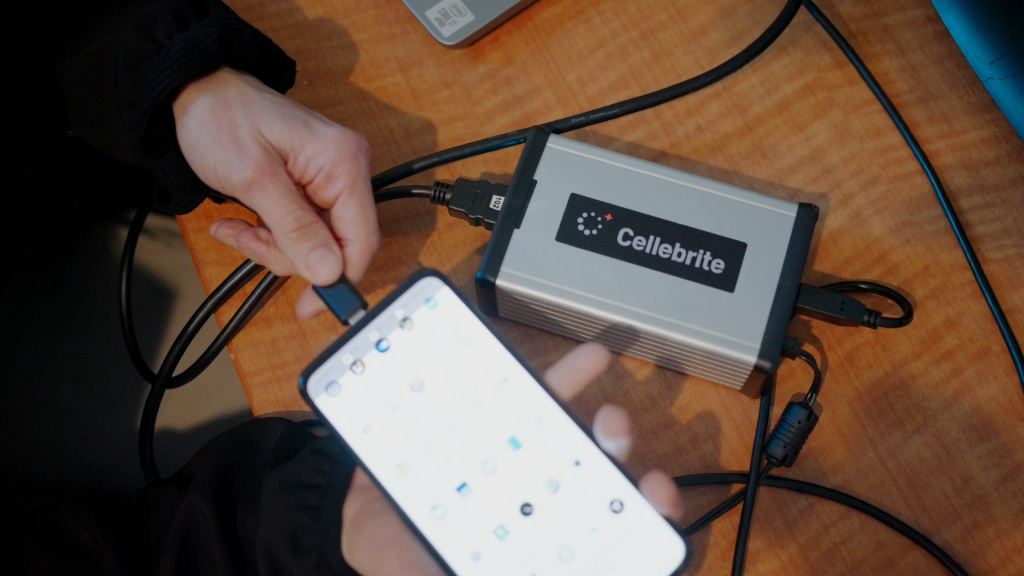
The evidence proved the stepfather’s involvement in the abuse and he was found guilty and sentenced to prison The case highlights the efficacy of Cellebrite Inseyets (which feature next-generation UFED) that offer examiners full file system extractions, including encrypted content.
Unlocking a Trove of Evidence
 In the infamous Grant Amato case, Geraldine and the prosecution made expert use of digital forensics that helped lead to a sentence of life in prison. Amato was infatuated with an online model and stole from his family to pay for her erotic live sessions. When confronted and told to stop and get help, Amato shot and killed his father, mother and brother in the family home.
It was digital forensics that helped Geraldine piece together a timeline of the day before the murders and ample evidence that showed Amato’s obsession with the model. The case was another example where technology offered prosecutors the evidence needed to present a solid, defensible case in court.
Solutions That Earn Public Trust
Criminals are becoming increasingly technologically savvy. Aware that law enforcement can analyze their devices, criminals go out of their way to hide their activity. “We have found that our bad guys are getting smarter. Absolutely. Like wiping phones or just using burner phones and using fake accounts, trying to cover their tracks,” Geraldine explained.
The communities they serve are understandably concerned whether law enforcement can stay ahead of these criminals.
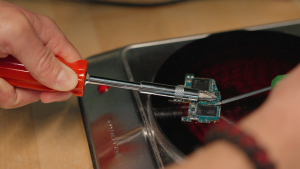 “When it comes to digital forensics, it’s just important that we are doing training with our people, making sure that we have good policies and that we’re communicating with the public about what we’re doing to help build that trust,” said Sgt. Christie Register who leads the unit. This need for tools that garner public trust is answered by the range of Cellebrite’s investigative solutions (i.e., Cellebrite Inseyets, Cellebrite Pathfinder and Cellebrite Guardian) which measurably accelerate case closure within the confines of the law.
Geraldine reflected on the power of scientifically-backed digital evidence, “Obviously you can have a witness that may or may not be telling the truth in court, but when they actually see the detailed evidence, they see the facts there. They see that detailed evidence doesn’t lie. It’s pretty much as good as the DNA or fingerprints.”
Technology for Verifiable Evidence and Stronger Collaboration
Prosecutors actively seek to strengthen the bridge between forensic labs and legal offices, underscoring the importance of strong digital evidence management. Geraldine spoke about how cloud solutions like Cellebrite Guardian, allows for easy evidence sharing. “For example, if we can get cloud data or if we can get vehicle data or surveillance—we’d make sure that they have everything that they need to successfully prosecute the case early on.”

K9 Siri is an Electronic Storage Detection (ESD), and is a partner to Detective Geraldine Blay-Raffo.
That sort of collaboration goes a long way. “We have a fantastic partnership with our state attorney’s office,” Christie was quick to add, “I think it’s kind of unique. They will come out on major crime scenes. They’ll come out to the scene to have a really good understanding. So, building those partnerships I think is key… they’re just as involved in the investigation to understand what we can do and make sure we’re not missing anything.”
Their stories speak to a movement towards information sharing and 21st century interconnectivity. Digital evidence management tools such as Cellebrite Guardian allow parties to collaborate with ease while maintaining the chain of custody and integrity of evidence.
Supporting the practice of collaboration between agencies in Seminole County, Sgt. Christie said, “We try to bring in all these other examiners to be in an environment where we can share information… because it’s hard if you’re an examiner, on an island by yourself, to even keep up with what’s out there.” Geraldine said that their agency helps over 20 other agencies—including those from other counties, the state and federal.
As digital technology continues to transform societies, law enforcement must stay on top of the latest in digital forensics technology, or risk facing roadblocks that can halt an investigation indefinitely.
As Cellebrite equips law enforcement with the technology to solve crimes, detectives can get to the underlying human motives of law enforcement—to bring justice to victims and put bad actors behind bars. When it comes to achieving justice, Geraldine said, “Obviously I can’t bring their loved ones back to life, but I can try to bring them a little bit of closure and try to bring a little bit of justice to these families. That’s definitely what keeps me coming back.”