


A Winning Crime Reduction Strategy: Arlington, TX Police Invests in Digital Forensics + Cloud Technology
In the heart of the Dallas-Fort Worth metroplex lies Arlington, Texas which serves as the entertainment district. Home to The Dallas Cowboys, Texas Rangers and the Dallas Wings among other top nightlife and family-friendly attractions, the Arlington Police force has 740 sworn officers with another 225 civilians serving the region.
“The city draws millions of people a year because of our entertainment venues, and it really allows our officers to do regular policing but also to develop skills in areas like tourism-based policing,” explained Kyle Dishko, the Assistant Chief at Arlington Police who leads the investigations division. “We’re trying to provide a sense of safety 24/7 in that area because we want people to come and spend their hard-earned money in our community.”
Dishko is a 29-year veteran of the force who, like others, started out on patrol and moved up in the ranks over the years. “Twenty of my 29 years have been in investigations and so that’s really where my interest has always lied. Getting to see all the investigations that our detectives do, and being over the whole Bureau, I really get to shape it.
Shaping that experience for all officers means outfitting them with the resources, technology, gear, compensation and benefits to maintain a talented force.
“When our officers walk in the door, the only thing they got to do is provide a flashlight and their boots. We buy the cars, and we provide them the state-of-the-art equipment, so they are number one, safe. And two, we focus a lot on wellness. Officer wellness and safety is really important, making sure they’re mentally prepared and they’re physically prepared.”
Dishko said it’s critical to equip officers with everything they need so they can focus on the job means a safer city.
Lowering Crime through Technology Adoption
“You look across the United States, crime is going down in a lot of places, and I really feel like the areas that most police departments have invested heavily in is technology,” Dishko said.
Dishko explained they’ve invested heavily in areas like digital forensics and crime analysis, allowing them to solve cases faster and “quite frankly, it allows us to solve cases that we may not solved in the past.”
Dishko said while their technology budget is a big number, the return on the investment translates to lower crime.
“Every year crime goes down in our city and it’s because we’re catching people on the first or second robbery. They do not get to their 20th or 25th anymore,” Dishko shared. “It’s not luck or timing anymore. It’s technology and skill. The other thing is crime analysis. Having people that are looking at the data every single day to link cases together so we can identify crime trends very quickly and then strategically deploy resources to solve cases and to stop those crime trends from occurring further.”
Investing in Digital Forensics and Cloud Technology
Arlington Police Department invests heavily in technology each year because it’s an expected part of the judicial process.
“It’s a piece of evidence that can’t lie to us,” Dishko explained. “People can lie to us. A cell phone can’t lie to us. A computer readout can’t lie to us. Cell phones help us show locations. They help us link cases together. Sometimes they provide a piece of evidence that may or may not even solve the entire case. And I think that’s the importance of an investment in digital forensics.”
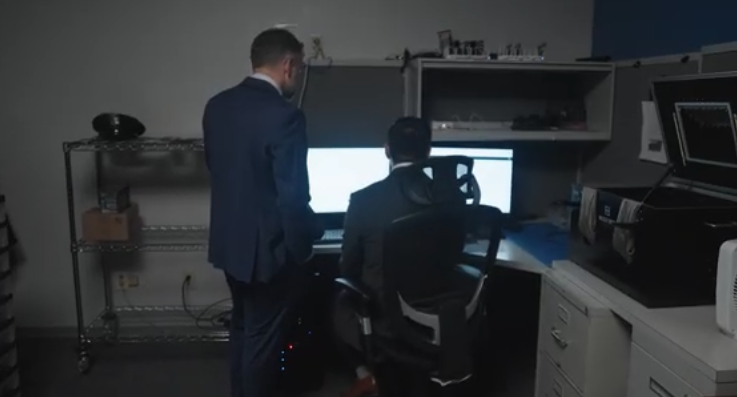
The Arlington Police Digital Forensics Lab is overseen by Sergeant Bryan Wang. Wang says they process about 400 devices a year and have a number of tools in their lab, including Cellebrite, particularly when it comes to parsing the data retrieved from devices.
“Our department prefers Cellebrite [Inseyets] PA and we recently received a license for Guardian,” Wang said, referring to the evidence management and sharing solution that allows agencies to easily collaborate on cases.
“The ability for them just to log in at their computer and read the report in the Cellebrite browser, and there’s no uploading and downloading,” Dishko explained. “We had bought everybody these two-terabyte external hard drives for their computers to read these reports. Now, the ability for us to share the reports directly with the district attorney’s office is really nice, too, because it’s all automated. From a chief’s perspective, I like the audit trail. I like the ability for us to know who’s opened those reports.”
Wang says they’re seeing a growing trend in tech-savvy officers who want to serve.
“Being able to understand the technology and parse through data and interpret it will become a much more prevalent thing because if we don’t have officers like that then we’re not going to be able to solve these cases,” Wang said.
“Digital forensics is still in its infancy,” Dishko believes. “We’re still getting much better at digital forensics. You know, digital forensics is a lot like DNA was 25 years ago where we we’ve made these constant investments in getting better at science.”
Finding Closure in Son’s Overdose Death, Dealer Charged with Murder
“He was a mama’s boy. He still called me mama, and he just was full of life. He was just a really fun, loving kid,” said Destiny Guevara, who lovingly recalls some of her son Karsen Ek’s best qualities.
“He had been struggling with addiction over the course of about three years,” Destiny shares. “He called me and said, ‘Mom, I’m really struggling.’ And I asked him to call some of his sober friends, some of his people in recovery and just said, ‘Hey, I’m not here, but I want to help you, but you need somebody who is there local to you.’”
Karsen died at just 20 years old, in November 2023.
“Luckily we found a cell phone next to Karson on the bed, and that was instrumental in the case,” Detective Jesse Lathrop explained. “Kasrsen had his location services turned on his phone. So I was able to track his phone’s location from the time of this deal, where it was showing up at this address at the time that he was telling this person that he was there.”
There’s now a law on Texas books that can hold the dealer in deadly fentanyl overdoses accountable for murder.
“We really realized very quickly that the cell phone of the victim was our greatest piece of evidence,” Dishko said. “The victim can’t tell us what happened to him. They’re gone but all that evidence is going to be on the phone. So having detectives that were trained to do digital forensics, having the ability to get in those phones quickly and secure evidence is critical.”
Dwaine McKinney, 27, was charged in the young man’s death.
Investigators were able to look at the whole picture, including text messages, photographs, location data and then the victim sending cash through apps. “So, we were able to see that, get search warrants on cash apps and prove who they sent the money to and then text messages after the deal was done,” Dishko said.
With such a strong case, McKinney pleaded guilty to murder and is currently serving 30 years in prison.
“I felt like both kids needed to be held accountable for their decisions, and ultimately my son was held accountable for his decision: he lost his life, and we have paid for his decision. And Dwayne, the dealer, ultimately is held accountable for his decision,” Destiny said, sharing that she offered McKinney a hug after the legal proceedings and he accepted it, telling her he was sorry. “I believe that when he said, ‘I’m sorry’ that he meant it. I could feel it in his hug.”
Digital Evidence Leads to Officer’s Alleged Killer
On the way to work one morning in 2023, a motorcycle officer with Arlington Police got into a minor fender bender. As the officer exchanged information with the other driver on the shoulder of the road, a driver hit the officer and took off, a collision that killed one of their own.
“Had it not been for geofence warrants and digital forensics, we were searching for a needle in a haystack,” Dishko said, noting they had no license plate and only a picture of a black sedan from a convenience store approximately 300 yards away.
The locations and conversations lawfully accessed on the suspect’s phone helped them identify who they believe is responsible and that person is now facing charges.
“Had it not been for digital forensics, we would not have solved that case,” Dishko said.
“We 100% solved the case on digital forensics.”
The suspect is slated to go on trial in early 2026.
Focusing on the Mission
Cellebrite’s mission is to protect communities, nations and businesses – something that resonates with Deputy Chief Dishko.
“The mission is not to sell you a product. Our mission is to help you guys solve cases. That’s really important when the top of a company is pushing that message down,” Dishko said. He and his team hosted a Cellebrite-led user forum, which we regularly put on throughout our global customer base.
“Our guys meet all the other digital forensics analysts and team members from all the other agencies in the Metroplex, and they can brainstorm a problem. Someone else may have a piece of equipment or technique that we don’t have. It’s important. I value that partnership very, very much. We know the right people to call and that helps us a lot.”