Why Digital Intelligence Technology is Critical in the Fight Against Drugs
It’s no secret the illicit drug trade world-wide is big business. According to the United Nations, the trade in illicit drugs is estimated to be worth $400 billion a year, and it accounts for 8% of all international trade. The major Drug Trafficking Organizations (DTOs) in Mexico and Colombia alone are said to generate somewhere between $18 to $39 billion in wholesale drug proceeds each year. Cocaine and marijuana are the main revenue-producers, but methamphetamine, heroin, and other illicit drugs are also being exported to drug-hungry markets worldwide with frightening efficiency.

Because cocaine and other illicit drugs are produced predominantly in LATAM, most believe this is merely
a regional problem with the United States being the largest consumer. However, the surge in worldwide demand has proven this is an issue for all nations. For example, the largest cocaine seizure ever in the UK (2,300 kg of cocaine with an estimated value of £184m found inside a consignment of bananas from Colombia) took place this year and drug seizures along Spain’s Costa Brava continue to demonstrate the rising demand in Europe.
This global problem is going to take time, cooperation, coordination, and technology to defeat. DTO leadership continues to be successful because of the extremely efficient business models they have created to move their products around the globe. With the amount of cash available to these organizations, they can buy the best technical equipment, utilize the most sophisticated (encrypted) methods for communications, and fund a logistics plan that allows them to meet the global demand for their product despite occasional shipment seizures.
The DTO’s large revenue stream allows the organizations to secure distribution routes around the world through force or payments to corrupt law enforcement (LE), public officials, and military personnel. They also have professionals on their payroll—lawyers, accountants, and bankers—to help establish and maintain numerous shell corporations that launder the proceeds from the drug trade to minimize law enforcement scrutiny. More recently, they have begun to utilize cryptocurrency to further conceal their activities from law enforcement.
Yet, while technology is enabling the drug trade to flourish worldwide, it also presents a huge opportunity for law enforcement agencies which, if leveraged properly, will allow agencies to capture those transporting the drugs, the corrupt officials assisting in the distribution of these drugs, and, ultimately, the leadership of the DTOs. The success of law enforcement agencies to interdict this criminal activity, however, will necessitate an increased reliance on this Digital Intelligence technology to exploit the DTOs communication networks, identify their patterns and practices, and ultimately disrupt and dismantle the organizations.
Powered by artificial intelligence and advanced analytics, digital technology is providing law enforcement with actionable Digital Intelligence to fight back—not just in LATAM, but through data-sharing efforts with agencies worldwide that are getting to those at the top. (Digital Intelligence is the data collected and preserved from digital sources and data types [smartphones, computers, and the Cloud] and the process by which agencies collect, review, analyze, manage, and obtain insights from this data to run their investigations more efficiently.)

Because cocaine and other illicit drugs are produced predominantly in LATAM, most believe this is merely a regional problem with the United States being the largest consumer. However, the surge in worldwide demand has proven this is an issue for all nations. For example, the largest cocaine seizure ever in the UK (2,300 kg of cocaine with an estimated value of £184m found inside a consignment of bananas from Colombia) took place this year and drug seizures along Spain’s Costa Brava continue to demonstrate the rising demand in Europe.
Using this technology, agencies worldwide are learning how to attack these organizations wherever they are located. Through training, cooperation, and communication, law enforcement agencies are becoming more successful at disrupting the flow of narcotics out of LATAM. This is all a result of the United States and other governments, along with large international organizations like INTERPOL and Europol, providing much needed training, database access, and support. This information is being shared between agencies, through secure channels, and cartel leaders are finally beginning to feel the pressure as technology used by police agencies identifies them and their assets for seizure.
It’s a good start, but it’s only a beginning. To stop the drug trade at its source, agencies need to look at the challenges that pock-mark the road to a safer world then begin to acquire the right tools, personnel, training, and support to protect their citizens while dismantling the business model that makes the drug trade so attractive.
THE CHALLENGES
The two primary drivers of the drug trade are the cartels themselves and widespread poverty and unemployment.
Organized crime in LATAM holds all the cards. They are powerful, with deep connections not just in their countries of origin but everywhere. Drugs go north and guns come south, (see sidebar) providing these organizations with firepower on a military scale to impose their will.
They’re tough, they’re well organized, they’re experts in the use of fear and intimidation, and laws and legal boundaries mean nothing to them. The cartels control the import and export channels. And they have a stranglehold on politics and in some cases, the military infrastructure that shields them. They are technically savvy (and growing more so by the day). But most of all, they have a nearly endless supply of money to fund their operations.

When the power and wealth of the cartels is set against the rest of the population in LATAM, which has little wealth and skyrocketing rates of unemployment, then add the recent fallout from the pandemic, which has stymied job growth in many LATAM countries, it’s easy to see why law-abiding citizens are tempted (or forced) to work for other side.
That financial/social incentive for the local citizens to support and cover for the cartels is a huge driver that cannot be ignored.
This is why developing solutions that can attack cartel leaders directly to take their cash and assets away, is key to destroying their business. Here’s how it works.
THE SOLUTION
Eliminating the flow of drugs out of LATAM and ending the violence calls for a three-pronged approach:
 Stopping Production: Putting an end to illicit crops and production facilities is one of the main focuses that LE needs to attack because without cocaine plantations or marijuana crops, the trade can’t exist. In many cases, military assistance is necessary to attack farms in the interior while local and federal authorities can hit production facilities in metropolitan areas.
 Stopping Transport: Law enforcement, border control, military, defense, and other organizations both inside and outside of LATAM must play a key role in stopping shipments. This requires international cooperation between countries.
As Oscar Rojas, sales director of strategic accounts in LATAM for Cellebrite described, “When you think about how to stop the cartels from exporting cocaine to the US for example, there needs to be cooperation between LE in Colombia and the authorities in Central America. The Americans also need to help there, because when shipments enter international waters, there must be cooperation between US law enforcement agencies to stop the shipments.”
Cooperation between federal and local authorities within and between LATAM is critical in disrupting production operations. But they can only do so if they have the tools and training to provide them with the right intelligence.
Cracking down on shipments alone, however, is only part of the solution.
Stopping International Trade by Getting to the Leaders:
The international drug trade is being managed by cartels in Mexico, Colombia, Venezuela, and elsewhere. As the federal police in Brazil have discovered, seizing shipments is good, but it generally only yields the low-level criminals who are doing the smuggling. And the drugs taken—even when massive busts happen—are all part of the business model. Losses happen, but the profits far outweigh those losses. Lost shipments are easily replaced and the money machine grinds on.
However, locating those at the top of the supply chain and seizing their personal assets—bank accounts, real estate holdings, boats, luxury cars, and personal aircraft—can yield millions of dollars while permanently disrupting the organizations supplying the drugs.
This strategy has worked very effectively in Brazil, not only to disrupt criminal organizations, but as a funding source for future anti-trafficking efforts. In Brazil’s model, a large percentage of seized dollars is given back to police agencies to fund more operations against those at the top.
With more dollars being poured back into law enforcement efforts, more organizations can be dismantled, which reduces the number of big-time operators involved in drug smuggling overall. Cartels are on to this, however, which is why they are investing so heavily in technology to hide their tracks. In response, law enforcement must acquire the technology and training to stay one step ahead.
HOW DIGITAL TECHNOLOGY IS HELPING
Because their business is multinational, cartel leaders must be in constant communication with their associates worldwide. This is their Achilles heal. If you can access their networks, you can eventually find them and their assets.
As Eduardo Negreiros, head of sales in LATAM for Cellebrite described, “all of their connections, all of their communications regarding money transfers and orders are done by phone.” Having the technology to access the data from these phones is critical in showing the connections between individuals and providing the breadcrumb trails of evidence that will eventually lead to those at the top of these organizations.
No one in the world better at manipulating cell phones than Cellebrite—that’s what we do. We’ve spent years working with law enforcement and military organizations around the world to understand their training requirements. As a result, we’ve developed solutions that are simple to use, so they’re easy for people who rotate in and out.
Our solutions also have the appropriate level of automation to present the networks to you without you having to figure it out. Understanding and being able to see these criminal drug networks is critical for agencies.
Perhaps most importantly, we understand the anti-drug-trafficking space. Cellebrite has been neck deep in the war on drugs both within the US and internationally for decades. We also understand that while agencies are trying to adopt digital technologies, few are at the same point in their digital transformation journey. This is where our knowledge of workflows and the solutions needed to make them more efficient can help.
As Eduardo explained, most agencies in LATAM have access to UFEDs, which allows them to gain access and collect data from the inexpensive phones used by those at the lower levels of these organizations.
Those at the top, however, are all using highly encrypted, high-end Android and Apple devices. Cellebrite Premium is the answer here for unlocking such devices. But lawfully collecting the data is all but useless if you must analyze that data manually, which is where many LATAM agencies are today.
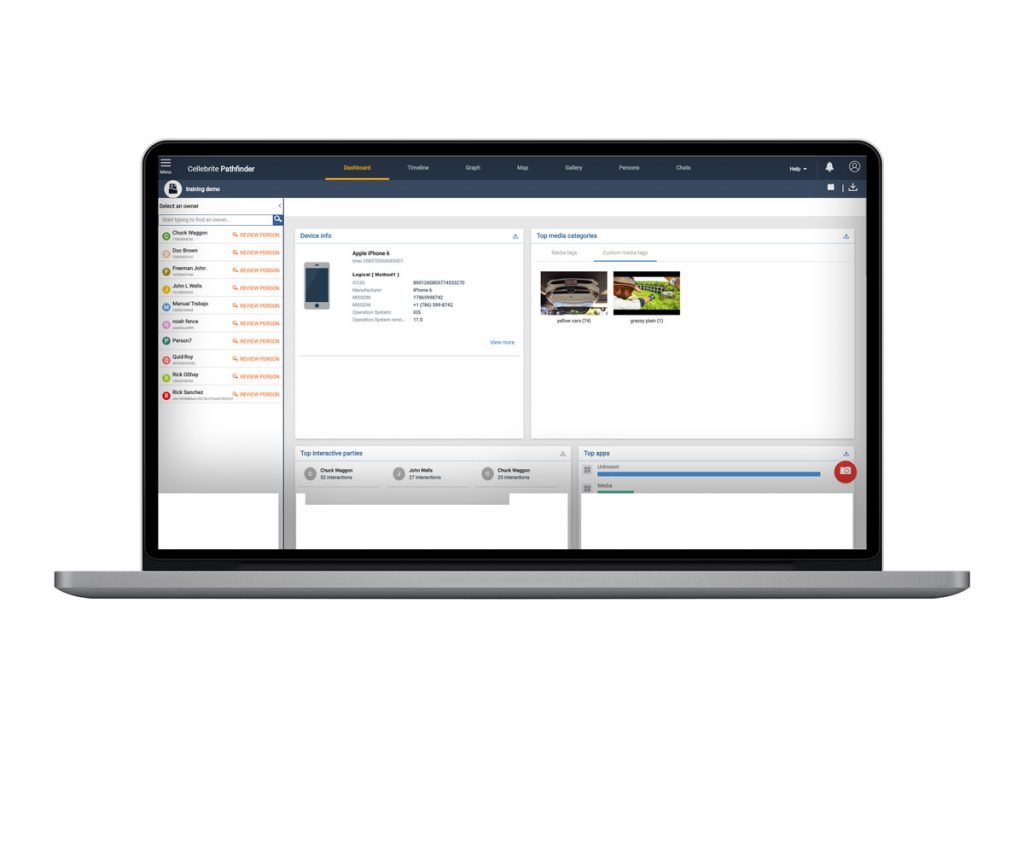
Adding a powerful analytics solution like Cellebrite Pathfinder across the board is what is critically needed to:
- Simplify and organize complex data in an intuitive, easy-to-understand format
- Analyze and process data to pinpoint key evidence
- Streamline processes to allow collaboration with internal teams and external stakeholders
Automating the analysis of the mountains of devices and information that are clogging agency labs is the key to being able to see the connections between the people, places, and transactions that are driving the drug trade inside and outside of LATAM.
Without analytics, agencies will continue to struggle to identify who the leaders are, who they are working with internationally, and where their assets lie. “At the end of the day,” Eduardo said, “what they need is to put all the guys in their boxes within the organization, understand the context, [and by doing so] understand everything.”

THE ROADMAP TO THE FUTURE
So, what does the roadmap to ending worldwide drug trafficking look like? Here are some of the critical steps that agencies must take to be ready for tomorrow’s challenges.
Equipping Teams for Success: Law enforcement personnel cannot take on the highly sophisticated/technologically advanced cartels without the right tools. At a minimum, adding Cellebrite Premium will solve the problem of accessing the encrypted devices used by those higher up in the organizations. Cellebrite Pathfinder will eliminate manual data analysis to finally reveal the all-important connections between individuals involved in all aspects of the drug-trafficking game.
Adding People Power: Having sufficient human resources to do the job is critical. As more devices and data flood labs, more skilled personnel must be added to meet the data challenge.
Training for Tomorrow: As more sophisticated tools are onboarded, personnel must be trained and ready to optimize these solutions to their fullest.
Collaboration: To gain the upper hand, agencies need to centralize key information in a database for each country then be able to share select information both internally (with sister organizations in their own country) and externally with other agencies worldwide.
In the end, beating the cartels is all about harnessing the power of technology to make investigations more efficient. Here’s how the efficiency equation works and how every country in the world can benefit by following it:
- Investing in technology allows law enforcement to do much more with the human resources they have. Having the most up-to-date solutions allow you to go much deeper into cases to reveal the truth.
- Technology allows certain key processes (like data analysis) to be automated, which saves time, resources, and money.
- Having data analysis capabilities allows investigators to see the whole case to connect the dots between people, places, and transactions.
- Technology also provides the means to collaborate more effectively, which in turn allows more cases to be solved faster. This leads to disrupting the drug trade and, ultimately, puts agencies on the road to putting the cartels out of business and building a safer world.
By investing in technology today, agencies can build more efficient workflows that take advantage of Digital Intelligence solutions to meet the challenges that lie ahead.
CONCLUSION
No single country can solve the world drug-trafficking problem alone. Building a drug-free world will take investment in the tools and skills needed to crush the head of the snake—those who sit atop the supply chain. It will also take serious investment to rebuild the economies in countries that have been terribly devastated by the drug trade. That, too, will take investment and support from the global community to bolster technology, rebuild infrastructure, and provide employment.
Most importantly, however, winning the drug wars will take collaboration—not just between police and federal agencies at the local level but regionally and globally. As the world leader in digital technology, we understand the intricacies of both the global drug-trafficking problem and the Digital Intelligence solutions needed to bring justice.
There is a clear path forward and technology is leading the way. At Cellebrite, we believe in the power of partnerships, which allow us to bring our expertise and digital solutions to the men and women worldwide who are trying to build a safer world.
HERE’S HOW DIGITAL TECHNOLOGY IS PLAYING A MAJOR ROLE IN DISRUPTING DRUG TRAFFICKING ROUTES WORLDWIDE
Laying the entire problem of drug trafficking at the feet of those in LATAM is hardly fair. True, much of the cocaine and marijuana trafficked worldwide is produced there, but it is consumed elsewhere. This is a worldwide problem that will take global cooperation.
Routes to the United States: The US is one of the closest destinations for drugs coming out of LATAM. It is also the world’s largest consumer of these illicit products.


As the accompanying map shows, main routes for drugs (primarily cocaine) being shipped to the US are through the Pacific Ocean from Colombia and through Central America—first through Guatemala and Mexico, and then from Mexico to the US.
Marijuana is trafficked primarily via routes through central Mexico. The Caribbean countries also provide major shipping corridors into the United States.
Primary routes inside the US spread north and east from the border with Mexico. While heroin shipped via Mexico into the US, originates in Iran and Afghanistan.
What makes intercepting these shipments difficult is that they can be hidden so easily amidst thousands of large containers on ships. Even single containers piggy-backed on trucks crossing the border into the US are hard to search and the sheer volume of truck traffic makes thorough search of each container all but impossible. Modern robotics and other technical search features are helping, but it is an uphill battle. This is why using evidence lawfully collected from digital devices to track shipments and get to those at the top of the pyramid is so important.
Routes to the UK: Drugs headed to the UK follow main routes through the Atlantic Ocean, through Brazilian ports in their overwhelming number and through ports in other South American countries in lesser quantity.
Most forms of illegal drugs originate overseas and are trafficked into the UK via various routes, including:
- Container shipping
- Yachts and small boats
- Light aircraft
- Vehicle traffic from continental Europe
- Airline passengers
- The post and fast parcels

Trafficking methods frequently rely on the recruitment of vulnerable people as “mules”—often at great risk to their lives and welfare. They can also rely on enlisting the help of employees at ports and borders; this corruption weakens the integrity of border security and increases the risk of other forms of trafficking, including firearms and organized immigration crime.

Profits are high at all stages of drug trafficking, but particularly for those who can access the drugs in their source country. Criminals from the Balkans dominate the cocaine market, but British traffickers remain a significant threat.
Routes to APAC: As noted by the kontinentalist, the big drug in APAC is methamphetamine. Typical routes for meth go from the Golden Triangle into Thailand where they are then rerouted to more wealthy countries such as China, Australia, Indonesia, Philippines, Malaysia, and Singapore
DIGITAL TECHNOLOGY—THE KEY TO WINNING THE DRUG WAR
Drug kingpins have established sophisticated networks to hide their operations and shelter the millions in profits drug trafficking produces. To stop the illicit trafficking of drugs worldwide, traditional methods of monitoring borders and seizing drugs are not enough. Law enforcement agencies need to map the connections and network chains, identify the way operations work, and coordinate international operations to dismantle drug trafficking businesses by using a top-down approach. And it all starts with cell phones.
Cell phones are the most used method of communication between the organized crime members. Data captured from phones helps police map the relationships between cartel members and those at the top of the supply chain. Digital Intelligence tools that capture this data are key to putting cartel leaders out of business.
Cellebrite tools are highly effective, empowering agencies to collect, review, analyze, manage, and obtain insights from this data to run their investigations more efficiently. The following are key insights into what’s being done to stop drug trafficking at its source, en route, and at its final destination

WHAT’S BEING DONE AT THE SOURCE?
Colombia
Destroying coca plants at their source is the first step. A report published by the Columbian government describes their multi-tiered approach:
- Destroy the plants at their source using herbicides sprayed from airplanes and manual labor to destroy coca plants.
- Provide social support to poor farmers to incentivize them to move from growing illicit coco plants to legal crops.
- Intense collaboration with the US including programs funded by US to improve the local law enforcement agency’s capabilities to combat drug trafficking through training, intelligence solutions [includes Cellebrite], and collaboration.
- Using the Colombian Navy to seize maritime traffic.
Mexico
Mexico’s multi-faceted response to serious organized crime focuses on entire networks, not just their heads. Such a policy requires law enforcement and intelligence apparatuses that have a robust investigative capacity.
Tijuana, for example, provides a model on how to deploy the military in trouble spots. Instead of soldiers, who often lack a mandate or the ability to conduct systematic investigations, newly vetted police units can take the lead in providing safety on the streets and conducting investigations. The military can be deployed in the background to supplement the police if they are subject to intense violence by the drug-trafficking organizations.
The state builds bridges and credibility with community members by showing them that the Mexican government can provide better goods and social services than the drug traffickers can.
Brazil
Since January 2019, the Brazilian Federal Police have implemented guidelines to combat organized crime that have completely changed the fight against international drug traffickers. This new strategy revolves around the seizing of funds and assets from cartel leaders, decapitalization through complex money laundering investigations, prosecuting leaders and sentencing them to jail time, and seeking much broader international cooperation.
These new investigation methods are aimed at dismantling criminal groups with a one-two punch: destroy the cartel leaders’ businesses economically by seizing their assets (a large portion of which are poured right back into funding for law enforcement) and continuing to seize narcotics shipments.
Historically, drug-trafficking kingpins have organized in such a way that they remain distanced and protected from low- profile members who actually traffic the drugs, so they are not exposed, criminally or financially, to arrest or seizure. This allows them to continue their activities without fear of any asset seizures or arrests. The occasional loss of a shipment has little or no impact on the viability of the business and many times they design their business model to absorb such losses as part of the cost of doing business.
Thus, to break the business model of organized crime, investigative strategies must focus on the seizure of assets from organized crime members, rather than concentrating solely on drug seizures. By focusing investigations on organized crime organizations, opportunities are also created to identify other assets and drug seizures on a more worldwide scale.
Preventing the circulation of illicit money is also important for two reasons:
- Given the increasing risk of organized crime penetrating legal economies, financial investigations are an integral component of modern and effective responses to criminal threats.
- Investigative studies with a financial focus can also provide intelligence to identify new drug supplies and completely map criminal networks both nationally and transnationally.
Brazil has an area of more than 8,500,000 square kilometers with a land mass of 16,886 kilometers. This leaves the country particularly vulnerable to the illicit smuggling of drugs into the national territory. Policing this much border is doubly complicated given Brazil’s maritime area of 7,491 kilometers, which is used by large organizations for drug remittances beyond the sea. For example, seizures made by the Federal Police show that approximately 60% of all cocaine seized in the national territory was carried out in a port environment.
Brazil’s geographical peculiarities are reflected in the complexity of the repression of cross-border crimes, especially when you consider that Brazil shares a border with 10 nations in South America, including the three largest cocaine producers (Colombia, Peru and Bolivia) and the largest marijuana producer in the world (Paraguay).
Brazil’s approach to the decapitalization of criminals through the seizure of assets, has turned out to be a highly successful investigation strategy and has propelled Brazil toward achieving the ultimate goal of criminal justice responses to the world drug problem by reducing the supply of drugs.
The Federal Police seized around US $250 million in drug trafficking assets in Brazil in 2020, the largest seizure in its history and one of the largest in the world.
STOPPING THE CARTELS
In the US: The United States works closely with the Brazilian Federal Police and has a powerful anti-drug-trafficking network throughout the world, as well has a deep working doctrine against money laundering.
Colombia and Mexico also work closely with the US on projects funded by US (Plan Merida and Colombia).
In the UK: Tackling county lines and the supply gangs responsible for high levels of violence, exploitation, and abuse of vulnerable adults and children, is a priority for UK law enforcement.
Law enforcement collectively has been stepping up its response, working to identify and take effective action in areas of the country with the most significant problems.

To enhance the law enforcement response still further, a multi-agency county lines coordination center has been established, bringing together officers from the NCA, police and regional organized crime units to develop the national intelligence picture, prioritize action against the most serious offenders, and engage with partners across government, including in the health, welfare, and education spheres, to tackle the wider issues.
In addition to helping NCA and policing partners to work together more effectively and deliver a more comprehensive response to the county lines threat, the center will assist in the development of a whole-system, multi-agency approach. This is vital to ensuring that vulnerable people are identified and safeguarded, factors behind the demand for drugs are understand, and proceeds of drug-related crimes are recovered.
In APAC: As stated in an article by VOA News, the drug business in APAC is dominated by the cartels producing out of the “Golden Triangle,” an area bordering Laos, Myanmar, and Thailand. Australia has been funding and working closely with the Thailand police to stop the progress of these cartels. The majority of drugs being manufactured today in APAC are methamphetamine, while raw materials are easily sourced from China and distributions to the more developed countries are relatively easy compared to the old school drugs.
WHAT HAPPENS AT PORTS WHERE SMUGGLING OCCURS?
The apprehensions in Ports are made through a lot of intelligence work by the Federal Police and Customs. Brazilian ports are huge and despite intense inspection and intelligence, it is impossible to inspect thousands of containers moved daily worldwide. In most cases, the carrier has no idea that the legal cargo they’re transporting is being used to hide illicit shipments of cocaine.
Large criminal organizations use “Rip-On/Rip-Off” techniques to hide cocaine in containers. As described by the UNODC, a “rip-off is a concealment methodology whereby a legitimate shipment, usually containerized, is exploited to smuggle contraband (particularly cocaine) from the country of origin or the transhipment port to the country of destination.
In “rip-off” cases, neither the shipper nor the consignee is aware that their shipment is being used to smuggle illicit cargo. For this method to be successful there will always be local conspiracy both in the country of origin or the transhipment port as well as in the destination country.”
WHAT HAPPENS WHEN DRUGS HIT THE STREETS?
Drug smuggling devastates local countries. Latin American countries are not only a route to the most rich markets in the US and Europe. Some of the production is distributed locally in countries that do not have the budget to fight against a crime funded by the rich consumer market of developed countries.
In areas dominated by traffickers where the police and the state services can’t reach, powerful kingpins corrupt local entities and absorb the poor population as traffic soldiers or drug producers. The seemingly endless supply of money offered by the cartels is naturally attractive to poor populations that do not have support from the public services and simply want to feed their families. And the distribution of cheap and more dangerous drugs like crack, creates neighborhoods of addicted people living in the streets. Sao Paulo’s “Cracolandia (Crackland) is a prime example.
The fight to control the routes for drug trafficking increases the violence and crime rate in small cities that do not have the resources to fight against the powerful crime organizations, which are financed by the consumers in developed countries.
WHAT IS THE IMPACT OF DRUG TRAFFICKING ON THE SOCIETIES?
The impacting costs of fighting the drug war worldwide are staggeringly high.
In the US: Drugpolicyfacts.org states that “National Drug Control Program agencies are requesting a total of $41.0 billion in drug control funding, an increase of $669.9 million over the FY 2021 enacted level. The largest increases in funding are requested to support drug treatment (+$498.0 million) and drug prevention (+$129.5 million). With these increases, the Budget Request devotes an historically high 57.3 percent of drug control resources to demand reduction programs and activities.”
The American Hospital Association quotes a recent release by the CDC stating, “Drug overdose deaths in the United States rose 29.4% in 2020 to an estimated 93,331, including 69,710 involving opioids, according to preliminary data released today by the Centers for Disease Control and Prevention. That’s up from a 5% increase in 2019. The data shows changes in overdose deaths by drug category and state.
A report from the National Institute on Drug Abuse says the National Drug Intelligence Center “estimated that the cost to society for drug use was $193 billion in 2007, a substantial portion of which—$113 billion—was associated with drug related crime, including criminal justice system costs and costs borne by victims of crime. The same report showed that the cost of treating drug use (including health costs, hospitalizations, and government specialty treatment) was estimated to be $14.6 billion, a fraction of these overall societal costs. It is estimated that the cost to society has increased significantly since the 2007 report, given the growing costs of prescription drug misuse.”
Add to this the millions of dollars needed to incarcerate those on drug-related offenses (the Pew Trust pegs the number for local jails alone at $25 Billion as of 2017) and the costs climb even higher. Something must change.
In the UK: The number of people in the UK whose deaths were caused by drug misuse increased last year. The last official numbers – for 2016 – attributed 2,593 UK deaths to drug misuse. Newer synthetic opioids, such as fentanyl, have contributed to this rise.
Opium production in Afghanistan and cocaine production in Colombia are also at record levels. This increase in production has the added effect of a putting high level of drug purity at street level as the criminals have less need to use cutting agents. This brings its own dangers.
The chemicals necessary for amphetamine production continue to enter the country in volume, while street prices drop, again indicating rising availability. Evidence suggests crack cocaine use—a particular driver of violence—is rising in England and Wales, while demand for all common drug types remain high.
There is significant, and often deadly, competition between rival organized crime groups at all stages of Class A drug production and supply. There is also corruption at every stage of the drug supply chain, including using corrupt port and airport officials.

Organized crime groups involved in drug trafficking are typically also involved in a range of other criminal activities, and the profits from illegal drugs are used to fund other forms of criminal operations, including buying illegal firearms and financing terrorism.
Crime associated with drug trafficking is very often violent, with direct links to the criminal use of firearms and gang- feud knife attacks, and traffickers frequently exploit young and vulnerable people. Cannabis gangs are notorious for the trafficking and exploitation of Vietnamese children and other vulnerable people to carry out live-in work in dangerous cannabis factories.
In the EU: The findings from a “Serious and Organised Threat Assessment” report found that “close to 40 percent of the criminal networks active in the EU are involved in the trade in illegal drugs. Around 60% of the criminal networks active in the EU use violence as part of their criminal businesses. Two-thirds of criminals use corruption on a regular basis. More than 80% of the criminal networks use legal business structures.”
The drug trade is lucrative: The market in the EU alone is estimated at €30 billion. These statistics point to not just the pervasive nature of organized crime networks but to the difficulty in tracking them down. A recent case study in Brazil shows how game changing technology solutions that lead to those at the top of the drug trafficking trade can be in destroying these businesses by seizing the assets of drug kingpins.
In APAC: The rise of drug trafficking into Asia is extremely concerning, but the scale of its impact on human security is even harder to fathom.
In Indonesia, amphetamine use rose from 850,000 users in 2015 to 1 million in 2016. In the Philippines, 850,000 people aged 10–69 years were meth users in 2015. A 2019 survey in Thailand reported that 653,000 people—or 1.3 percent of the population aged 12–65—were “yaba” (meth pill) users in the previous year; 372,000 people (0.7 percent of the population) were crystal meth users. In Australia in 2016, the number of users of amphetamines in the previous year was estimated at 280,000, or 1.4 percent of people aged 14 and older.
An article published by the kontinetalist summarizes the problem this way, “Among the thousands of drug users in Asia, many are driven to substances by social disadvantages such as low educational attainment, joblessness, financial instability, and poverty. In fact, sustained drug abuse often makes individuals more vulnerable to these forces. Joblessness, caused by a financial recession or a pandemic, for example, can lead to higher levels of drug use and other high-risk behaviors, further pushing people into a vicious cycle of lower social mobility, financial difficulties, and even family problems—all of which contribute to drug consumption and addiction.”
Due to the capillarity structure of these organizations, formed by numerous parallel groups with specific activities related to the contact with foreign suppliers, the internalization and transport of narcotics in the national territory, the distribution in the consumer market, and remittances being sent to other continents through dozens of ports, it is clear that the traditional strategy of simply seizing drugs and arresting those at the crime scene isn’t enough.
Seizing shipments needs to continue, but as the Federal Police in Brazil have proven, a bolder strategy that puts those at the top of the supply chain out of business by seizing their assets and literally shutting off the money spigot is the key to winning the drug war.
Agencies can’t do this on their own, however. This is a global problem that calls for global cooperation. Agencies across LATAM must be properly equipped with the right tools and training to follow the money to its source, but it will take the full cooperation of nations worldwide. Only then can stability be restored, not just in LATAM but across the world.