
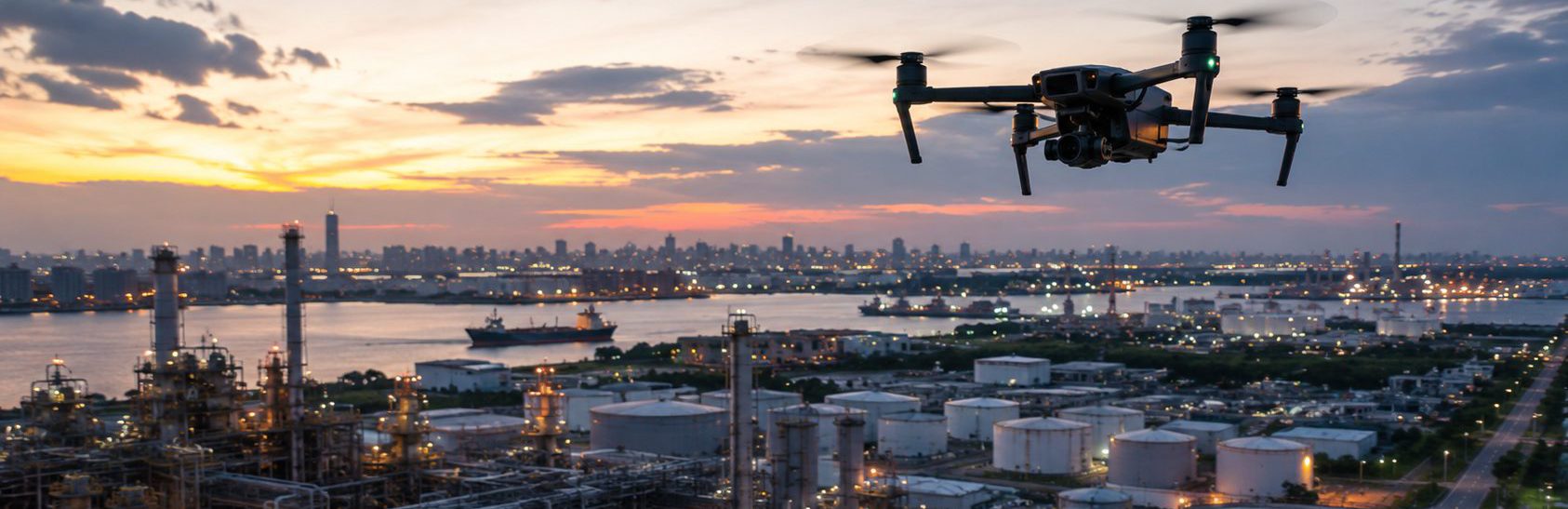
Unifying What Happens in the Sky with What’s on a Device: Our Exclusive SkySafe Partnership for Drone Investigations
A drone can now be the weapon, the getaway vehicle and the crime scene — all in one flight.
FBI Deputy Director Chris Raia has warned that it’s “only a matter of time” before the battlefield-style drone attacks seen in Ukraine and the Middle East reach the United States, calling drones “the biggest threat right now.” With the World Cup playing out in 11 U.S. host cities, the agency, along with its partners at the Department of Homeland Security has seized more than 600 drones flying in restricted airspace, announcing the staggering figure via X (formally Twitter).
The problem is only escalating. There are major concerns for flying safety as the FAA reports more than 100 drone incursions a month at U.S. airports, and according to Senate testimony, NORTHCOM logged more than 350 unauthorized flights across 100+ military installations in a single year. Langley Air Force Base endured 17 straight nights of drone overflights that grounded F-22s — and the operators were never found. The FBI now trains local police nationwide because, as one Bureau official put it, every major public gathering is a drone environment.
How Do You Investigate a Drone Incident?
Detecting a drone and understanding it are two different jobs and run on two different systems. Agencies see a threat in the sky, yet the evidence — ownership, intent, network, history — lives on a device that’s often recovered hours or days later, if at all. That gap is where investigations stall and our expanded partnership with SkySafe helps close it.
We’re combining SkySafe’s real-time drone detection and airspace intelligence capabilities with Cellebrite’s investigative capabilities — so agencies can go from “a drone was there” to “here’s who’s flying it, what it’s been doing, and what it’s carrying” without losing time. That’s real-time and historical flight data, fused with mobile forensic evidence — turning scattered signals into actionable intelligence that reveals hidden patterns, identifies illicit networks and accelerates investigations.
Cellebrite and SkySafe: Airspace Intelligence Meets Forensic Depth
Following Cellebrite’s acquisition of SCG Canada, Inc. in March, we are now SkySafe’s exclusive digital forensics partner — pairing airspace intelligence with extraction and decryption capabilities unmatched anywhere else. As SkySafe’s founder and CEO Grant Jordan put it, “effective drone investigations start with trusted airspace intelligence” and paired with Cellebrite, agencies get the forensic depth to support both the immediate response and any long-term investigations.
This isn’t a one-time integration — it’s a foundation. We’re building toward richer drone-related intelligence and deeper investigative capability across public safety, defense, intelligence and enterprise security, so the partnership keeps pace with a threat that isn’t slowing down.
This is about protecting communities, safeguarding infrastructure and giving agencies the speed and clarity to act before it’s too late.
Want to learn more? Get in touch!
Frequently Asked Questions
What is the Cellebrite and SkySafe partnership?
Cellebrite is SkySafe’s exclusive digital forensics partner. Following Cellebrite’s acquisition of SCG Canada, Inc., the partnership pairs SkySafe’s real-time drone detection and airspace intelligence with Cellebrite’s mobile extraction and decryption capabilities, so agencies can move from detecting a drone to identifying who was operating it and what it was doing.
How do you investigate a drone incident after the drone is detected?
Detection and investigation are two separate jobs. Detection flags a threat in the airspace; investigation establishes ownership, intent, network, and history, which usually live on a device recovered hours or days later. Investigating a drone incident means fusing real-time and historical flight data with mobile forensic evidence from recovered devices to reconstruct who flew the drone, where it operated, and what it carried.
Can investigators identify who was operating a drone?
Yes. By combining SkySafe’s airspace and flight data with forensic evidence extracted from recovered devices, investigators can link a drone to its operator, surface connected devices and networks, and reveal patterns across multiple flights — turning scattered signals into attributable intelligence.
What are best practices for handling UAS digital evidence?
Capture airspace and flight data in real time, since it may not persist. Preserve the chain of custody on any recovered device before extraction. Correlate flight data with device evidence rather than treating them separately. And use tooling built for court-admissible digital forensics so the evidence supports both the immediate response and any long-term investigation.
About the Author
Shiven Ramji is President of Products and Technology at Cellebrite (Nasdaq: CLBT), where he leads the company’s product and technology organization across its AI-powered Digital Investigative and Intelligence platform. He joined Cellebrite in 2026 from Okta, where he served as President of Auth0 and ran a $1 billion ARR business, and has held senior product and technology leadership roles at DigitalOcean, Amazon, NBCUniversal, LiveIntent, and The Nielsen Company. He is also an active angel investor and startup advisor.