
The Gap Between Capture and Decision Is a Readiness Problem: Why phones, drones, wearables and connected systems require one exploitation discipline
Key Takeaways
- Digital exploitation turns every recovered phone, drone or sensor into a source of networked intelligence rather than a one-off capture, closing a gap most forces don’t know they have
- Exploitation is a race against time: locations shift, credentials expire and networks adapt, speed to insight decides whether a capture shapes today’s decision or only explains yesterday’s
- The same lesson that reshaped counter-IED operations now applies to drones: defeating the device wins the moment, but understanding the network behind it changes what comes next
Modern warfare is generating vast volumes of digital data and intelligence opportunities that existing disciplines were never designed to capitalize on at the speed and scale demanded by contemporary operations.
For decades, Defense and Intelligence organizations have relied on established disciplines to understand adversaries, identify networks and inform operational and strategic decision-making. Human Intelligence, Signals Intelligence (SIGINT) and Technical Intelligence remain fundamental to this effort.
The rapid proliferation of connected technologies has introduced a new source of intelligence: the digital twin. The digital twin is the aggregate digital representation of an individual, organization or system, created through the devices they carry (phones, wearables, vehicles and sensors), the services they access and the data they generate. It offers a persistent record of communications, locations, behaviors, relationships and activities, providing an increasingly comprehensive representation of human activity and intent. For many people, it is no longer simply a reflection of reality but an integral component of it, and as human activity becomes increasingly inseparable from data, understanding the individual requires an understanding of their digital twin.
Every device carries a story about its user and the network to which it belongs. Special Forces and intelligence agencies have spent years developing the capabilities required to recover and exploit these insights from captured digital devices. Yet these capabilities have largely remained within specialist communities and were never designed to support exploitation at the scale modern conflict now demands.
As digital devices proliferate across the battlefield, the requirement has expanded from a niche intelligence function to a broader warfighting necessity. The gap between capture and exploitation is now a readiness problem, not a theoretical one.
Why Speed Matters
The moment forces recover a device, exploitation becomes a function of time. Locations change, accounts lapse, credentials expire and individuals move. A captured device capable of exposing an adversary network today may produce only historical reporting tomorrow.
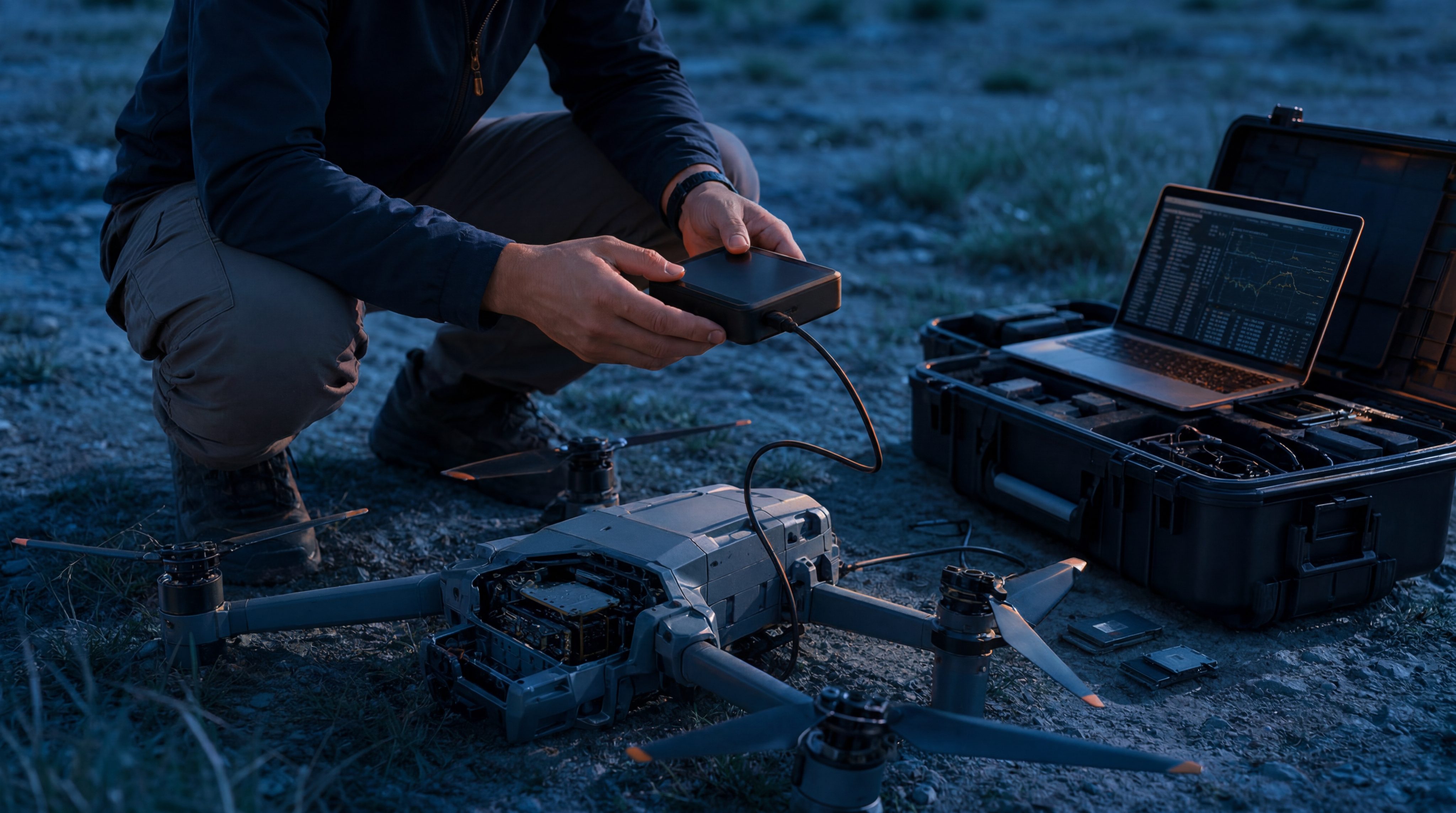
That urgency is compounding as drones move from specialized assets to consumable battlefield systems. In Ukraine, drones now account for more than eighty percent of destroyed enemy targets, while the country’s defense industry is producing approximately 200,000 FPV drones each month. Thousands of drones are now being deployed, lost, recovered, modified and replaced every day, creating an equally unprecedented intelligence opportunity.
Autonomous and connected systems are continuing to grow, meaning adversaries will increasingly operate at scale. Success will depend not only on the ability to defeat these systems, but on the ability to exploit captured systems and understand the operators, networks and supply chains behind them. In many cases, that understanding may become as important as destruction itself.
That same connectivity cuts both ways. Every exploited device yields information about its user, contributing to what Cellebrite terms a Human Signature Digital Identity (HSDI): a structured profile derived from digital, biometric and communications data. Understanding an adversary’s HSDI helps reveal identity, behavior, associations and movement.
Digital Force Protection applies the same principles in reverse. The 2018 fitness tracker exposure, in which an interactive heat map built from aggregated fitness tracker data revealed the locations and movement patterns of military personnel at sensitive bases worldwide and prompted a Pentagon review, demonstrated how routine digital activity can disclose sensitive military information. One discipline seeks to understand what an adversary’s activity reveals; the other seeks to understand what friendly activity exposes
The Readiness Gap
The challenge is rarely access to digital devices. Forces routinely capture phones, drones, storage media and other sources of digital intelligence. Many Special Forces missions are conducted specifically to recover and exploit these devices. The challenge lies in transforming those captures into actionable intelligence at scale before the operational opportunity expires.
Site exploitation often occurs under chaotic and time-sensitive conditions, where documentation gaps and breaks in chain of custody remain persistent risks. Modernization has also progressed unevenly. One unit may operate with current tools and processes, while the next remains bound to legacy systems, a condition not confined to any one force or region. This is not a question of effort; operators are working with tools and workflows never designed for the environment they now face.
Every minute between capture and usable information is a minute the adversary retains the initiative.
In Ukraine, drone-on-drone engagements can conclude in minutes, making exploitation speed a determinant of survivability rather than merely an intelligence advantage. Manual transfers, disconnected systems and laboratory-centric processes cannot keep pace with an adversary operating at digital speed. The gap between capture and decision persists because most organizations were designed to process digital evidence, not exploit digital intelligence. Closing that gap requires a different operational discipline.
The Same Lesson, A Different Domain
This is not a new lesson. The IED became the leading cause of coalition casualties in Iraq and Afghanistan. Coalition forces spent billions of dollars on armor, jamming and protection measures designed to defeat the device in the moment, yet detection rates improved only marginally. What changed the trajectory was Document and Media Exploitation (DOMEX): treating every recovered device, document and hard drive as intelligence capable of linking a bombmaker to a network.
Defeating the device reduced immediate risk while understanding the network degraded the threat.
The commercial drone now occupies a similar position. A relatively inexpensive system can generate effects once associated with artillery while being produced and fielded at a pace traditional acquisition cycles struggle to match. The challenge is no longer simply detecting and defeating the platform. It is understanding who built it, who modified it, who supplied it and who operated it.
A force that can deploy thousands of drones but cannot rapidly exploit a captured flight controller and identify its operator is generating scale without institutional learning.
One Discipline, Five Functions
We define this discipline as the conversion of captured digital devices into networked intelligence enabling a continuous flow of intelligence for tactical, operational and strategic decision-making.
This discipline includes five functions:
- Detection and collection at the point of capture, the piece specialized units are already doing.
- Platform-level exploitation, reaching past a device’s data into its firmware and flight control logic, where an adversary’s tradecraft lives; emulation platforms like Corellium make this practicable at speed.
- Identity resolution, run alongside exploitation rather than after it, fusing biometric, open-source intelligence and SIGINT signatures into a single HSDI.
- Secure and interoperable dissemination across a shared intelligence environment.
- Feedback into the next detection cycle, so every capture sharpens the next and the discipline shifts from attribution toward preemption.
Most organizations are strong at the first function but thin on the other four. The readiness gap appears in the spaces between them. Fragmented devices, analogue processes and drone dominance without information dominance are all manifestations of the same problem. This discipline provides the operational framework to close that gap.
Why It Matters for Allied Forces
Allied forces face different adversaries and operate in different theaters, but they increasingly share the same challenge of generating the understanding required to inform policy, shape responses and anticipate adversary activity before it achieves its intended effect.
For the United States, it may involve attributing activity across the Indo-Pacific by connecting devices, digital identities, supply chains and human networks to reveal the actors behind strategic competition. For the Baltic states, it may be identifying and disrupting Russian intelligence, influence and destabilization networks operating below the threshold of conflict. For Ukraine, it is increasingly about exploiting captured drones, phones and digital systems quickly enough to reveal the operators, networks and supply chains behind them before the next attack occurs.
While often treated as distinct problem sets, these challenges are increasingly interconnected in practice. Russian intelligence activity, organized crime, terrorist networks, traffickers and proxy actors frequently exploit the same communications platforms, financial systems, supply chains and digital infrastructure.
While different threats may present themselves in different ways, the underlying challenge of understanding the network behind the event remains the same. The threat operates as a network, the response must do the same.
Standardizing this discipline across allied forces is what allows activity linked to the Iranian-designed Shahed drone program, supply chains supporting Russian operations in Ukraine, and device recoveries on NATO’s eastern flank to be recognized as components of the same network rather than isolated incidents. The value lies not in any single capture, but in the ability to connect people, devices, behaviors and activities across theaters, organizations and time to generate understanding, inform policy and enable coordinated counter-initiatives across the Alliance.
How Organizations Can Close the Gap
Closing the gap does not require a rebuild. Whether operating in the United States, the Baltic states or across NATO, it requires strengthening capabilities that already exist and connecting them into a coherent operational discipline:
- Standardizing field triage to ensure consistent collection and exploitation at the point of capture.
- Extending exploitation beyond individual devices to platform-level analysis.
- Fusing identity resolution into the point of capture, linking devices, individuals and networks in real time.
- Replacing organizational silos with secure, interoperable dissemination that allows intelligence to move as quickly as the threat.
- Treating every capture as an input to the intelligence and operational cycle, rather than a closed investigative event.
None of this diminishes trained operators or sound judgement; it gives them a discipline built for the speed at which modern threats move. It also cuts both ways. A force capable of exploiting a captured device’s HSDI is equally capable of understanding what its own people, devices and activities expose to an adversary. This approach and digital force protection are therefore two sides of the same discipline.
An answer delivered in minutes can change an operation. The same answer delivered days later may only explain what already happened.
The distance between capture and decision is no longer an intelligence problem. It is a readiness problem.
Alen Tomczak is a US military leader and defense technology executive with more than 15 years of experience supporting defense and intelligence missions. At Cellebrite, he leads global Defense and Intelligence strategy and business development, with a focus on innovation, strategic growth, and government engagement.
David Dale is a Strategic Advisor to Defense and Intelligence organizations at Cellebrite. Following a 24-year career in the Ministry of Defense focused on intelligence-led operations and targeting, he advises defense, intelligence, and national security organizations on digital intelligence.