Processor
Intel® CoreTM i7-10700 (10th Gen, 8-Core, 2.9GHz-4.8GHz, 65W)

Cellebrite Kiosk puts forensic-grade extraction capabilities wherever your investigation begins helping your team find investigative leads, confirm threats, uncover networks, generate court-ready reports or offboard employees without waiting for a specialist or having to ship a device.
OVERVIEW
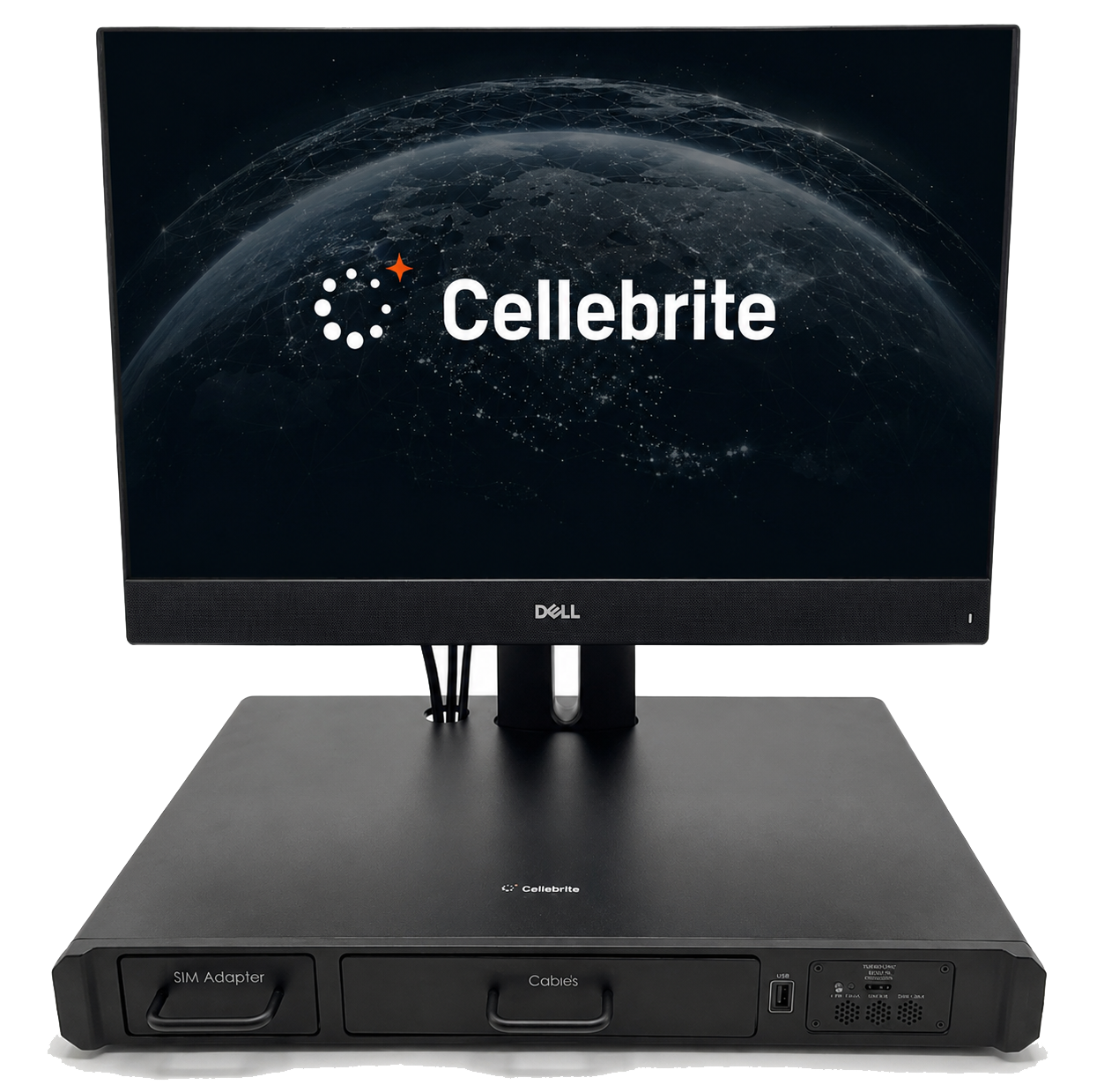
Cellebrite Kiosk is a self-contained digital forensics station that enables teams to perform Full File System mobile device extractions and generate court-ready evidence reports, without a forensic lab or specialist on-site. Kiosk runs on a 23.8-inch touchscreen interface and does not require an external computer, laptop or lab equipment to operate. From corrections intake, border checkpoints, officer-involved triage or simplifying mobile collections for corporations, Kiosk offers enterprise-grade extraction capabilities, wherever investigations begin.
Powered by Cellebrite Inseyets software, which is trusted worldwide, and featuring an embedded Turbo-Link adapter, Kiosk represents a generational leap over previous solutions. It is the only solution of its kind that offers Full File System (FFS) capabilities for the latest iOS and Android devices and the most advanced decoding engine available.
Deployed where it matters most — Kiosk is designed to support frontline operators across the full spectrum of public safety environments.

Deploy at any station or field location. First responders can perform extractions and confirm threats immediately, without a forensic specialist on-site.

Identify gang affiliations, criminal network ties and contraband intelligence at intake. A secure, auditable fixed-location deployment with no portable device risk, so your facility stays ahead of threats before they escalate.

Surface travel history, affiliations and suspicious communications at the point of entry, in minutes, not days. Support high-volume processing across shifts without slowing checkpoint operations.
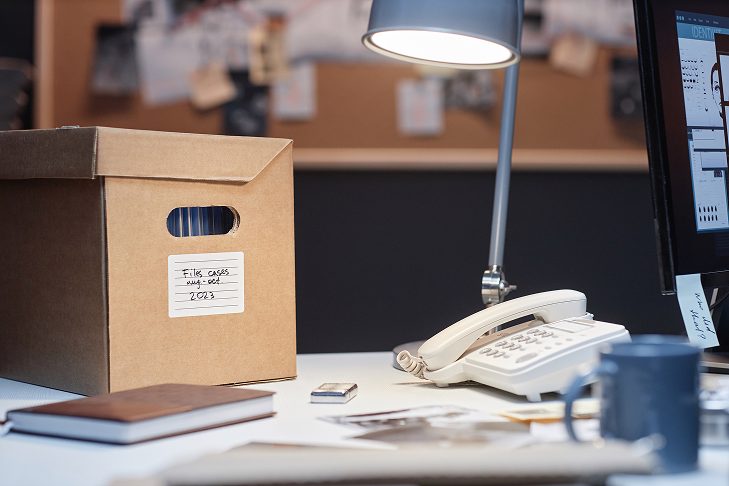
Verify or refute a subject’s account while they’re still in the room. Investigators move from interview to evidence in minutes, building stronger cases with less guesswork and more confidence. All extractions are performed within established legal frameworks and require appropriate authorization. Kiosk is designed to support lawful investigations.

Ensure your organization is protected when an employee leaves, securing and collecting their mobile devices to prevent data leaks, protect company assets and meet compliance requirements.

Simplify the employee experience during mobile data collection, automate the complexity of the collection process and limit business interruption.

Kiosk’s centralized mobile collection station reduces the cost of employee travel and hardware shipping. Organizations can deploy a kiosk in multiple locations, for remote configuration and collection.
Capabilities
Every Kiosk ships fully configured and ready to deploy, so you can start building cases from day one, with no extra accessories, no specialist setup, no shipping hardware, and no lab dependency.
Anti-glare 1920×1080 VA display with full touch support for guided workflows.
10th Gen i7-10700 (8-Core, 2.9–4.8GHz) for simultaneous extraction and decoding.
Built-in Cellebrite Turbo-Link adapter — no separate dongle needed for advanced access.
Multi-format SIM adapter supports both Micro and Full-size SIM cards for reading and cloning.
PCIe NVMe Class 40 solid-state drive ensures fast read/write speeds for large evidence files.
Online, offline, and hybrid licensing options — adaptable to the security requirements of any organization.
Runs Cellebrite's latest Inseyets software with PA10 decoding engine, Streamline workflows and more.
Customizable reports are auto-generated from extraction data — fully audit-logged for chain of custody.
Whether replacing an aging solution or deploying forensics capabilities for the first time, Kiosk offers capabilities no competing product can match.

From a contraband-cellphone epidemic running criminal enterprises out of state prisons to a fentanyl surge at the southern border, North America’s caseloads are outpacing lab capacity everywhere an investigation begins. Kiosk extracts Full File System evidence on-site, so the case starts the moment the device is seized.
A South Carolina State Grand Jury secured life-without-parole sentences in June 2025 against two inmates who directed a methamphetamine trafficking ring that moved more than 630 kilograms into the state — coordinated entirely from prison using contraband cell phones. In a related case from the same investigation, prosecutors tied a single inmate’s phone-run enterprise to $1 million in seized assets. The FCC voted in September 2025 to let state prisons jam contraband signals, with South Carolina positioned to be the first state to activate it in 2026. Until jamming goes live, every confiscated device is still a lead if it’s processed before the case goes cold. Kiosk extracts it at intake, without shipping the device or waiting on a specialist.
CBP seized more than 100 million lethal doses of fentanyl along the southwest border in just the first six months of fiscal year 2026, alongside 152,000 pounds of methamphetamine, already surpassing all of FY2025, and more than 28,000 pounds of cocaine. A seized phone can hold the route, the contacts and the payment trail investigators need to tie a smuggling operation together, but only if someone can read it before the traveler is released. Kiosk delivers that evidence at the checkpoint, in minutes.
Cellebrite’s 2026 Industry Trends Report found that 56% of devices now arrive locked, delaying access to evidence from the first minute of a case, while 67% of agencies still rely on portable hard drives to move evidence between teams — a workflow that adds delay and chain-of-custody risk at every hop. Investigators are already managing a median of six to ten active digital cases at once, each with two to five devices attached. For a department without an in-house digital forensics unit, that math doesn’t close. Kiosk gives any operator the ability to run a complete extraction-to-report workflow at the point of contact — no specialist, no shipping, no backlog.
Every day, the region’s borders, prisons and courtrooms generate digital evidence that has to stand up across jurisdictions and beat a shrinking clock. Kiosk extracts Targeted and Full File System evidence on-site, ready the moment the case opens — no specialist required.
Nearly 178,000 people crossed the EU’s external borders irregularly in 2025, led by the Central Mediterranean, where arrivals to a single island more than tripled. Beyond the EU’s borders, one of the region’s busiest maritime crossings recorded its second-highest year on record — about 41,500 people across 72 nationalities. Kiosk gives any operator the same Full File System extraction and reporting workflow at every entry point.
One member state’s justice ministry disclosed in November 2025 that its prisons had seized 80,000 mobile phones in a year, including devices linked to a contract killing ordered from behind bars — prompting a “zero mobile phones in prison” plan across six of its highest-risk facilities. Kiosk surfaces the network behind a device at intake, before it disappears from view.
The EU’s e-Evidence Regulation becomes binding across every member state on 18 August 2026, requiring a response to cross-border evidence requests within 10 days — eight hours in an emergency — even as forensic capacity still varies sharply between member states. More than half of all EU criminal investigations already involve a cross-border evidence request, and Europol’s 2025 threat assessment describes networks operating across several jurisdictions at once. Kiosk gives every member state the same on-site, court-ready extraction capability, closing the gap before the clock starts.

From high-threat border corridors to vast geographies where the nearest forensic lab is a flight away, APAC’s scale demands a different model. Kiosk puts Full File System extraction at every point of contact, with no specialist and no delay required.
Thailand’s border with Myanmar sits at the heart of the Golden Triangle. Over 1.6 million crossings were recorded at Thai land checkpoints in the first 10 months of 2025 alone, in a corridor where narcotics trafficking and organised crime converge. Kiosk surfaces travel history, affiliations and suspicious communications at the point of entry, in minutes.
Australia’s Border Force operates across major international airports with authority to inspect electronic devices at the border. Kiosk eliminates the gap between seizure and actionable intelligence, producing court-ready extraction output on-site in a format already trusted across Five Eyes jurisdictions.
India’s law enforcement agencies serve 1.4 billion people across 28 states, with land borders spanning Pakistan, Bangladesh and Myanmar, and most without a regional forensic lab within practical reach. INTERPOL’s 2025 Asia and South Pacific Cyberthreat Assessment confirms the pattern: rising caseloads, documented gaps in forensic tools and insufficient technical capacity. Kiosk closes that gap wherever investigations begin.
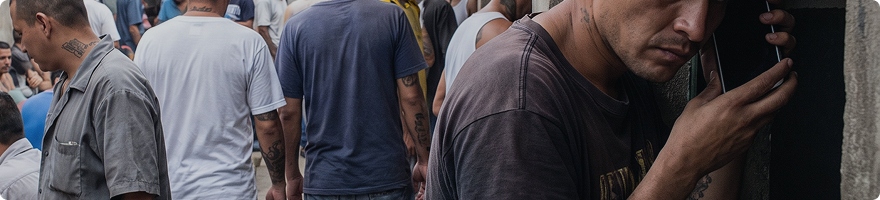
From prison cell blocks where cartel leaders run multi-state operations over a smuggled phone, to a border corridor absorbing the largest displacement crisis in the hemisphere, Latin America’s investigations move at the speed of a network the forensic lab can’t reach in time. Kiosk extracts Full File System evidence at intake, at the checkpoint, wherever the case begins.
Brazil’s PCC has directed drug trafficking, extortion and kidnapping operations across roughly 22 states from inside its own prisons, using smuggled cell phones to hold virtual “trials” and order hits on lieutenants outside the walls. Brazilian authorities have confiscated tens of thousands of contraband phones from prisoners in a single year, and the network has endured regardless. Kiosk surfaces gang affiliation, network ties and contraband intelligence the moment a device enters intake, and before it becomes another signal the system can’t see.
More than 7.89 million Venezuelans have fled their country, the second-largest displacement crisis in the world, and Colombia alone hosts 2.8 million of them, with crossings climbing 41% in the first two months of 2025 compared to 2024. Smuggling networks move people and profit through the same corridors, and the phones carried across them hold the routes, contacts and payments that identify the operators. Kiosk surfaces that evidence at the checkpoint in minutes, not after the device, and the lead, has already moved on.
An estimated $5 billion in goods crosses South America’s Triple Frontier between Paraguay, Brazil and Argentina every year, and almost none of it legal. It’s one node in a region where organized crime moves faster than forensic capacity can follow, which is why INTERPOL now runs digital forensics capacity-building programs across 35 countries in Latin America and the Caribbean. Kiosk closes that gap at the point of contact, regardless of which side of the border the case starts on.
From a contraband-cellphone epidemic running criminal enterprises out of state prisons to a fentanyl surge at the southern border, North America’s caseloads are outpacing lab capacity everywhere an investigation begins. Kiosk extracts Full File System evidence on-site, so the case starts the moment the device is seized.
A South Carolina State Grand Jury secured life-without-parole sentences in June 2025 against two inmates who directed a methamphetamine trafficking ring that moved more than 630 kilograms into the state — coordinated entirely from prison using contraband cell phones. In a related case from the same investigation, prosecutors tied a single inmate’s phone-run enterprise to $1 million in seized assets. The FCC voted in September 2025 to let state prisons jam contraband signals, with South Carolina positioned to be the first state to activate it in 2026. Until jamming goes live, every confiscated device is still a lead if it’s processed before the case goes cold. Kiosk extracts it at intake, without shipping the device or waiting on a specialist.
CBP seized more than 100 million lethal doses of fentanyl along the southwest border in just the first six months of fiscal year 2026, alongside 152,000 pounds of methamphetamine, already surpassing all of FY2025, and more than 28,000 pounds of cocaine. A seized phone can hold the route, the contacts and the payment trail investigators need to tie a smuggling operation together, but only if someone can read it before the traveler is released. Kiosk delivers that evidence at the checkpoint, in minutes.
Cellebrite’s 2026 Industry Trends Report found that 56% of devices now arrive locked, delaying access to evidence from the first minute of a case, while 67% of agencies still rely on portable hard drives to move evidence between teams — a workflow that adds delay and chain-of-custody risk at every hop. Investigators are already managing a median of six to ten active digital cases at once, each with two to five devices attached. For a department without an in-house digital forensics unit, that math doesn’t close. Kiosk gives any operator the ability to run a complete extraction-to-report workflow at the point of contact — no specialist, no shipping, no backlog.
Every day, the region’s borders, prisons and courtrooms generate digital evidence that has to stand up across jurisdictions and beat a shrinking clock. Kiosk extracts Targeted and Full File System evidence on-site, ready the moment the case opens — no specialist required.
Nearly 178,000 people crossed the EU’s external borders irregularly in 2025, led by the Central Mediterranean, where arrivals to a single island more than tripled. Beyond the EU’s borders, one of the region’s busiest maritime crossings recorded its second-highest year on record — about 41,500 people across 72 nationalities. Kiosk gives any operator the same Full File System extraction and reporting workflow at every entry point.
One member state’s justice ministry disclosed in November 2025 that its prisons had seized 80,000 mobile phones in a year, including devices linked to a contract killing ordered from behind bars — prompting a “zero mobile phones in prison” plan across six of its highest-risk facilities. Kiosk surfaces the network behind a device at intake, before it disappears from view.
The EU’s e-Evidence Regulation becomes binding across every member state on 18 August 2026, requiring a response to cross-border evidence requests within 10 days — eight hours in an emergency — even as forensic capacity still varies sharply between member states. More than half of all EU criminal investigations already involve a cross-border evidence request, and Europol’s 2025 threat assessment describes networks operating across several jurisdictions at once. Kiosk gives every member state the same on-site, court-ready extraction capability, closing the gap before the clock starts.
From high-threat border corridors to vast geographies where the nearest forensic lab is a flight away, APAC’s scale demands a different model. Kiosk puts Full File System extraction at every point of contact, with no specialist and no delay required.
Thailand’s border with Myanmar sits at the heart of the Golden Triangle. Over 1.6 million crossings were recorded at Thai land checkpoints in the first 10 months of 2025 alone, in a corridor where narcotics trafficking and organised crime converge. Kiosk surfaces travel history, affiliations and suspicious communications at the point of entry, in minutes.
Australia’s Border Force operates across major international airports with authority to inspect electronic devices at the border. Kiosk eliminates the gap between seizure and actionable intelligence, producing court-ready extraction output on-site in a format already trusted across Five Eyes jurisdictions.
India’s law enforcement agencies serve 1.4 billion people across 28 states, with land borders spanning Pakistan, Bangladesh and Myanmar, and most without a regional forensic lab within practical reach. INTERPOL’s 2025 Asia and South Pacific Cyberthreat Assessment confirms the pattern: rising caseloads, documented gaps in forensic tools and insufficient technical capacity. Kiosk closes that gap wherever investigations begin.
From prison cell blocks where cartel leaders run multi-state operations over a smuggled phone, to a border corridor absorbing the largest displacement crisis in the hemisphere, Latin America’s investigations move at the speed of a network the forensic lab can’t reach in time. Kiosk extracts Full File System evidence at intake, at the checkpoint, wherever the case begins.
Brazil’s PCC has directed drug trafficking, extortion and kidnapping operations across roughly 22 states from inside its own prisons, using smuggled cell phones to hold virtual “trials” and order hits on lieutenants outside the walls. Brazilian authorities have confiscated tens of thousands of contraband phones from prisoners in a single year, and the network has endured regardless. Kiosk surfaces gang affiliation, network ties and contraband intelligence the moment a device enters intake, and before it becomes another signal the system can’t see.
More than 7.89 million Venezuelans have fled their country, the second-largest displacement crisis in the world, and Colombia alone hosts 2.8 million of them, with crossings climbing 41% in the first two months of 2025 compared to 2024. Smuggling networks move people and profit through the same corridors, and the phones carried across them hold the routes, contacts and payments that identify the operators. Kiosk surfaces that evidence at the checkpoint in minutes, not after the device, and the lead, has already moved on.
An estimated $5 billion in goods crosses South America’s Triple Frontier between Paraguay, Brazil and Argentina every year, and almost none of it legal. It’s one node in a region where organized crime moves faster than forensic capacity can follow, which is why INTERPOL now runs digital forensics capacity-building programs across 35 countries in Latin America and the Caribbean. Kiosk closes that gap at the point of contact, regardless of which side of the border the case starts on.
TECHNICAL SPECIFICATIONS
Intel® CoreTM i7-10700 (10th Gen, 8-Core, 2.9GHz-4.8GHz, 65W)
64GB DDR4 (2×32GB) non-ECC
1TB PCIe NVMe Class 40 SSD
23.8″ FHD 1920×1080 VA Touch Anti-Glare
Intel I219-LM Ethernet 10/100/1000
USB-C 3.1 Gen 1 x1 USB-A 3.1 Gen 2 x1 (PowerShare) USB-A 3.1 Gen 1 x1
Cellebrite Turbo-Link Adapter (embedded)
Cellebrite Multi SIM Adapter (Micro + Full-size)
FSP040-DHAN3
AC Inlet-Outlet C14+Switch+2 Fuses Module
Cellebrite Inseyets Core or Pro
Online, Offline, or Hybrid options available
resources
The extraction and decoding engine powering every Kiosk workflow.
Extend your forensic reach to drone and UAV evidence.
Secure case management and court-ready evidence sharing for every Kiosk extraction.
Turn Kiosk extractions into investigative intelligence. Pathfinder surfaces connections, patterns, and leads across your case data.
See what sets Cellebrite Kiosk apart
Cellebrite Kiosk Isn't
Closing The Gap Between Detection And Analysis
Talk to a Cellebrite specialist about how Kiosk can help you close
cases faster, reduce backlog and extend forensic capability to
every point of contact.
Cellebrite Kiosk is a self-contained digital forensics station that enables operators to perform Full File System mobile device extraction and generate court-ready evidence reports at any point of contact — without a forensic lab or trained examiner on-site. Powered by Cellebrite Inseyets software and featuring an embedded Turbo-Link adapter, Kiosk is built for corrections facilities, border checkpoints, law enforcement triage, and regional offices where lab access is limited or unavailable.
Yes. Cellebrite Kiosk is the next-generation replacement for Cellebrite Responder, which is being discontinued in 2026. Kiosk delivers significant upgrades across every dimension:
No. Cellebrite Kiosk is purpose-built for operators with little to no digital forensics experience. A guided touchscreen interface walks users through every step — from device detection through extraction and report generation — without requiring specialized technical knowledge. Cellebrite also offers onboarding support and certification programs for agencies that want to build deeper in-house proficiency over time.
Kiosk supports the full range of modern mobile devices, including:
Kiosk hardware and software are sold separately, giving agencies flexibility in how they structure procurement. Software licensing is available in online and offline configurations to support all deployment environments — including air-gapped facilities and high-security corrections or government settings. Cellebrite recommends a software license over a dongle for the best operational experience.
Yes. Kiosk supports offline and online licensing and produces Open Image format output, making it adaptable to classified, air-gapped and high-security environments. Its fixed-location, all-in-one form factor also eliminates the risk of portable devices being lost, stolen or mishandled — a key operational consideration for corrections facilities and secure government deployments.
Cellebrite Kiosk is the only solution of its kind that delivers Full File System capabilities for the latest iOS and Android devices and the most advanced decoding engine available.
Evidence extracted via Kiosk flows directly into Cellebrite Guardian for collaborative case management, secure evidence sharing, and AI-powered investigation review — with full chain-of-custody maintained throughout. Kiosk runs Inseyets Core or Pro, so every extraction benefits from the same PA10 decoding engine used by lab examiners worldwide. Open Image format output also ensures compatibility with industry-standard analysis tools for agencies operating at any classification level.


