
Contraband Phone Triage: How Cellebrite Genesis Turns Device Backlogs into Investigative Intelligence
Contraband phone triage with Cellebrite Genesis helps correctional agencies decide which recovered devices to examine first. Instead of reviewing devices one at a time, investigators ask questions across an entire batch, compare identifiers and connections, and send the highest-risk devices to a human reviewer first. Genesis does not replace forensic extraction, chain of custody or examiner judgment.
Why Do Contraband Phones Matter Beyond Possession?
Correctional agencies routinely recover contraband phones and other electronic devices from cells, housing units, staff-controlled spaces, closets, common areas, perimeter zones and other concealed locations. A single institutional search, intercepted shipment, drone recovery or staff-corruption investigation may produce dozens or even hundreds of devices at once.
Although every recovered device should be documented and preserved through the agency’s formal chain-of-custody process, the circumstances of recovery often provide limited attribution. A collection of phones recovered from a shared dormitory, for example, may offer few immediate answers about which incarcerated individuals controlled the devices, which criminal organizations benefited from them or whether employees helped introduce or facilitate their use.
The threat extends far beyond possession of prohibited property. The Insane Gangster Disciples case in South Carolina shows how contraband phones can transform a correctional facility into a command-and-control center.
The investigation produced a 147-count superseding indictment against 40 defendants, which the U.S. Department of Justice described as the largest federal racketeering conspiracy in South Carolina history. Incarcerated leaders of the Insane Gangster Disciples used contraband cell phones to coordinate murders, kidnappings, firearms trafficking, drug distribution, witness intimidation and an international narcotics operation from within South Carolina Department of Corrections institutions.
Every charged defendant ultimately pleaded guilty to offenses associated with the RICO conspiracy. The case illustrates why a recovered contraband device may represent far more than a disciplinary violation. With proper collection, analysis and dissemination, these devices may contain critical evidence of organized crime, violence, corruption and criminal activity extending well beyond prison walls.
Why Does Device-by-Device Review Create a Backlog?
Extracted data adds a second challenge: volume and complexity. Once contraband devices are processed using tools such as Cellebrite Inseyets or Cellebrite CFID, investigators may face tens or hundreds of thousands of communications, contacts, images, account records, financial transactions, application artifacts and location indicators per device.
Under a traditional review model, a digital forensic examiner, intelligence analyst or investigator must open and search each extraction individually. This device-by-device process consumes significant time and increases the risk that the most operationally important evidence will remain buried in a backlog while personnel review devices of comparatively lower investigative value.
This challenge is especially acute for correctional systems supporting multiple institutions with limited digital-forensics and intelligence personnel. Contraband devices may arrive at a central laboratory in large batches after being recovered from different prisons, housing units, staff areas, mailrooms, drone-drop locations or intercepted smuggling operations.
Without an effective post-extraction triage capability, agencies have no practical or consistent method for determining which devices demand immediate examination and which can be placed into a lower-priority review queue. For more on how digital intelligence supports these investigations, see our overview of contraband phone investigations in correctional facilities.
What Is Post-Extraction Triage With Genesis?
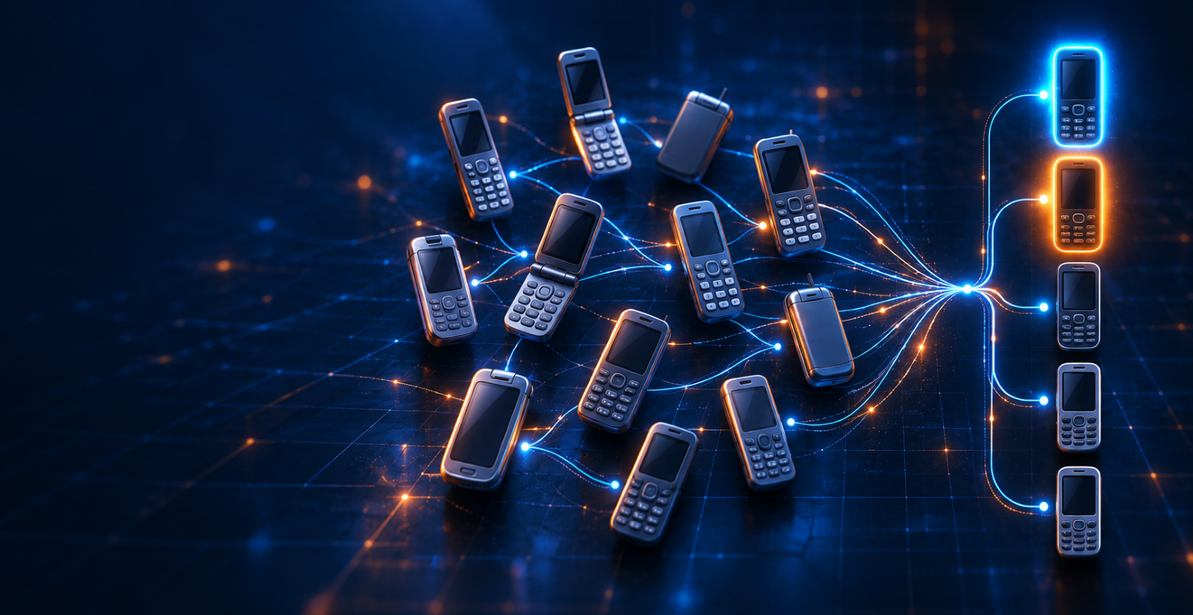
Post-extraction triage with Genesis means using AI to ask high-level investigative questions across an entire batch of extracted devices, so personnel can decide which devices need human review first. The intended outcome is rapid, evidence-based prioritization. Instead of completing a full manual examination of every device before determining which ones matter most, the agency can use Genesis after extraction to ask those questions across the entire collection.
The purpose is not to automatically establish ownership, prove criminal conduct or replace the judgment of an examiner or investigator. Rather, it is to identify devices, relationships and information that warrant immediate human review. This allows investigative and intelligence personnel to concentrate first on devices potentially connected to active cases, known offenders, security threat groups, suspected corrupt employees or immediate threats to institutional and public safety.
How Does Genesis Triage Dozens or Hundreds of Contraband Devices?
During the post-extraction evaluation, Genesis can support the triage of dozens or hundreds of devices through a unified analytical workflow.
Compare identifiers across the entire batch
Investigators can rapidly identify, organize and compare critical device and attribution information, including IMEI, IMSI, MSISDN, subscriber details, application accounts, usernames, email addresses and other identifying data contained within the evidence set. By surfacing these indicators across the entire batch, Genesis helps personnel prioritize contraband devices that may have the greatest investigative or intelligence value.
Connect devices to criminal networks
Investigators can also identify common accounts, telephone numbers, aliases, contacts and other connections appearing across multiple devices. These correlations may reveal device ownership, communication networks, gang or security threat group affiliations, financial activity, staff involvement or links to existing investigative subjects. Agencies can move beyond reviewing each device individually and develop a broader understanding of the criminal networks, institutional threats and coordinated activity represented within the collected evidence.
Flag time-sensitive threats for escalation
Genesis can also help identify devices containing indicators of time-sensitive threats. Indicators that may justify immediate escalation include references to:
- Planned assaults or retaliatory violence
- Pending contraband deliveries
- Compromised employees
- Escape activity
- Witness intimidation or threats against staff
The agency can route those devices to the appropriate intelligence unit, criminal investigator, institutional leadership or outside law-enforcement partner while maintaining the original evidence and established chain of custody.
What Are the Benefits of an Intelligence-Led Priority Queue?
The principal benefit of Genesis triage is not simply faster searching, it is the more effective allocation of limited investigative resources. Genesis enables an agency to develop an intelligence-led priority queue in which devices associated with immediate safety threats, active prosecutions, suspected employee corruption or significant criminal networks are elevated for detailed review. Lower-priority devices remain preserved and available for later analysis instead of consuming scarce personnel time before higher-risk evidence has been addressed.
This workflow also creates greater consistency and repeatability. Agencies can develop standardized questions and triage criteria based on their mission, current intelligence requirements, investigative priorities and known institutional threats. Applying those criteria across each new evidence batch can reduce reliance on ad hoc decision-making and provide supervisors with a clearer explanation of why particular devices were prioritized.
Where Do Human Judgment and Legal Authority Still Apply?
Results must still be validated against the underlying evidence, and investigators remain responsible for complying with applicable legal authority, privacy requirements, agency policies, disclosure obligations and evidentiary procedures. Genesis does not replace forensic extraction, detailed examination, traditional investigative work or human judgment.
It also cannot retroactively establish where a device was recovered or conclusively determine who possessed it when recovery documentation is incomplete. What it can do is surface identifiers, relationships and potentially relevant evidence that help agencies develop attribution, recognize emerging threats and determine which devices warrant immediate attention.
Speed Up Contraband Phone Triage With Cellebrite Genesis
Genesis can transform bulk contraband-device collections into a prioritized, explainable and repeatable investigative workflow. For correctional agencies facing increasing device volume, complex criminal networks, institutional-security threats and limited analytical staffing, it provides a faster path from extracted data to actionable, human-validated intelligence. Instead of allowing the most consequential device to remain hidden in a growing evidence backlog, agencies can focus their personnel where the potential threat and investigative value is greatest.
Ready to turn your contraband-device backlog into prioritized leads? Explore Genesis or contact our team to see it in action.
About the Author: Kevin Hughes is a Solutions Engineer at Cellebrite. Prior to working at Cellebrite, he was a criminal intelligence analyst who then built and led the Polk County Sheriff’s Office (Iowa) intelligence and digital forensics program.
Frequently Asked Questions About Contraband Phone Triage
What is contraband phone triage?
Contraband phone triage is the process of prioritizing recovered devices for detailed review based on investigative value and risk. After extraction, agencies compare identifiers, connections and threat indicators across a batch to decide which devices need human examination first.
What can Genesis compare across a batch of contraband devices?
Genesis can surface IMEI, IMSI, MSISDN, subscriber details, application accounts, usernames, email addresses and common contacts, aliases and telephone numbers appearing across multiple devices.
Does Cellebrite Genesis replace forensic extraction or examiner review?
Cellebrite Genesis works after extraction. It does not replace forensic extraction, detailed examination, traditional investigative work or human judgment, and results must be validated against the underlying evidence.
Can Genesis prove who owned a contraband phone?
Genesis cannot prove who owned a contraband phone on its own. It can surface identifiers, shared accounts and relationships that help investigators develop attribution, but it cannot retroactively establish where a device was recovered or conclusively determine who possessed it when recovery documentation is incomplete.
How does Genesis help agencies with limited analytical staff?
Genesis supports an intelligence-led priority queue. Devices tied to immediate safety threats, active prosecutions, suspected employee corruption or significant criminal networks are elevated first, while lower-priority devices stay preserved and available for later analysis.