
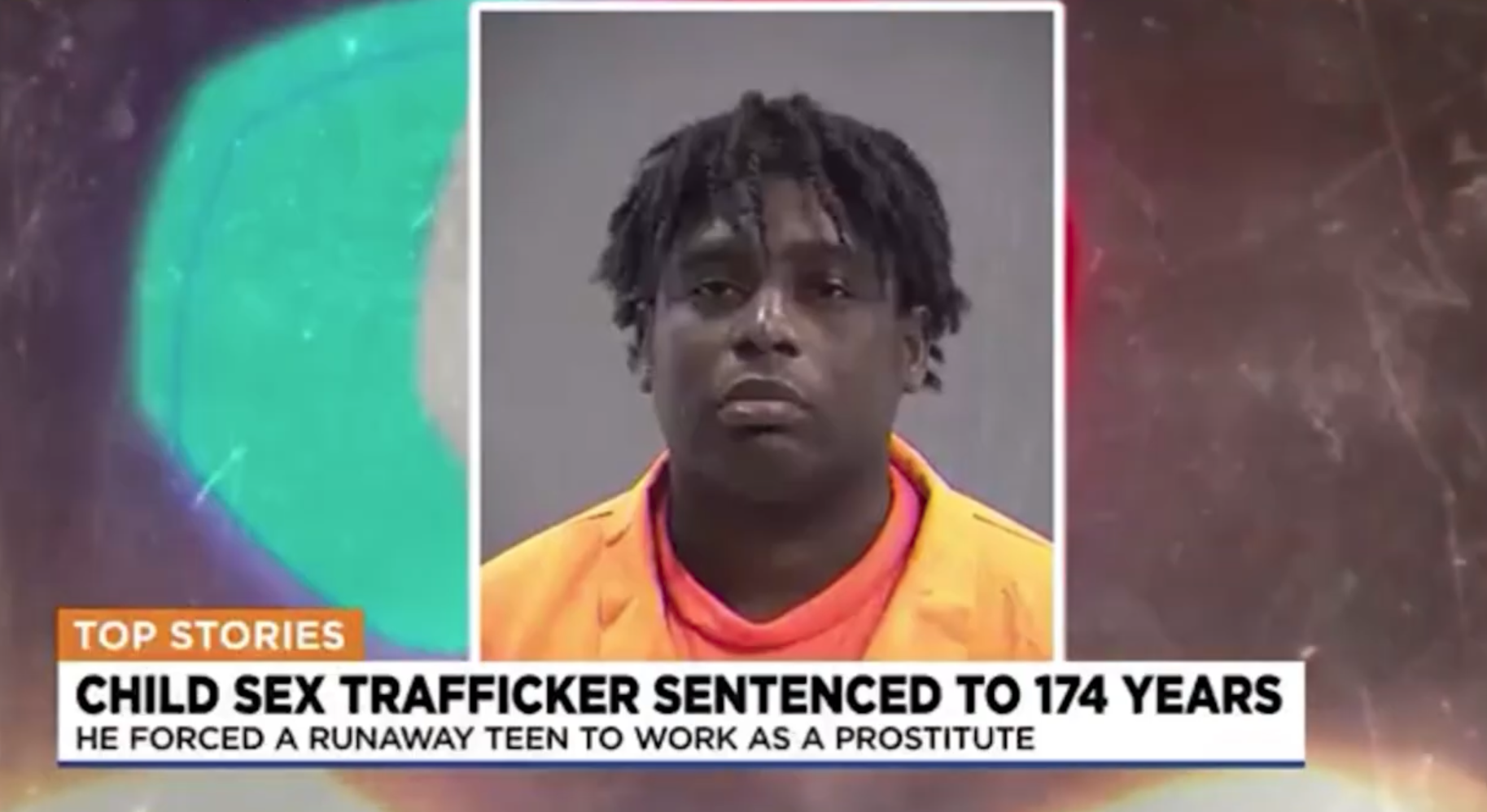
‘He’ll Never Be Able to Do This to Another Girl Again:’ How Phone Evidence Led to a Predator’s 174 Year Sentence in Maricopa County
At a Glance
- Maricopa County Attorney’s Office prosecutors secured a conviction on nine counts of child sex trafficking and a 174-year sentence
- Matching chats from both phones, presented to the jury in Cellebrite reports, proved the trafficker controlled the victim
- Prosecutors, Phoenix police and Scottsdale police share evidence on Cellebrite Guardian, with every access logged
- Analysts use Cellebrite Pathfinder to find connections across multiple phones and suspects
Phoenix has a stretch of road that prosecutors know well, locals call it “the Blade.” It’s a notorious three-mile area near downtown with a reputation that reaches far beyond Arizona – drug use, prostitution and human trafficking.
“Here in Phoenix, not only do we have that issue that is everywhere, we also have a nationally known prostitution track,” says Maggie Toth, a deputy county attorney in the Sex Crimes Bureau at the Maricopa County Attorney’s Office. “It’s so well known that there’s even YouTube channels that discuss the Blade, that follow the women around on the Blade, that showcase the traffickers.”
Maricopa County is the third largest District Attorney’s Office in the United States and Toth specializes in human trafficking prosecution. In 2024, the National Human Trafficking Hotline identified 300 trafficking cases in Arizona involving 671 victims. Of those, 136 were sex trafficking cases, and 55 of the victims were minors. Behind each number is a person, one of them was a 15-year-old girl.
A Promise and a Bus Ticket
She was a runaway, lured to Phoenix by Leroy Ellis Jr., a 30-year-old man, who reached out over social media after the teen liked one of his rap videos. Toth says he saw someone young and impressionable. “She’s 15 at this time. He is literally twice her age, but giving her this promise of a better life, of love, of a roof over her head, of someone to care for her and love her was more than she’d been offered in a very, very long time,” Toth says. “So he purchased her a Greyhound bus ticket.”
It’s a common pattern, traffickers target young people online, pull them away from friends and family, and then isolate them in a new city. In this case, the relationship looked like a partnership at first. “You are my girlfriend. We are a team,” Toth explains. “We’re going to build this better life together.” But at a certain point the teen girl tried to pull back. “That’s when again, she started getting hit,” Toth says. “She’s here in Phoenix. She’s isolated. She doesn’t really even have family to call anyways. She has nowhere to go. He is her only support system, and if she doesn’t do this, she’s going to get beat.”
The rest of the story lives inside two phones.
A Tip and a Trail of Messages
Phoenix Police Department learned about the case through a cyber tip from the National Center for Missing and Exploited Children. Detectives investigated and set up an undercover date and were able to recover phones from the victim and Ellis. “There’s usually always at least one if not multiple phones in these kinds of cases. And usually that is where the bulk of our corroborating evidence is found,” Toth says.
Her colleague Cassie Watts sees the same thing from a different seat in the office. Watts is the antitrafficking paralegal at the Maricopa County Attorney’s Office and the administrator for Cellebrite Guardian, which helps the team securely manage and share evidence. She reviews the evidence in these cases every day. Traffickers use technology to run their operations, from posting ads to arranging dates, and that activity leaves a record. “Even with girls that are still walking the Blade or the track, they’re still communicating with their traffickers by text,” Watts says. “There are code words for dates. There’s location data to show where they are.”
Mike Meisels, the county attorney office’s investigations commander, says that’s why his team looks there first. “Everybody’s got a phone,” he says. Detectives lead the investigation, and analysts and technicians pull together what they find. “We’ll be able to put the case together. Or at least find out what the truth was and we may not have a case, but at least we’ll find out what really happened.”
A Forensics Team Fifteen Years in the Making
The Maricopa County Attorney’s Office did not start building its forensic team when this case arrived. The office began investing in digital forensics 15 years ago. Today its Crime Analysis and Research Unit supports more than 30 law enforcement agencies across the county, with seven crime analysts and two digital forensics specialists.
Partner agencies face heavy backlogs, and line detectives often carry 40 to 50 cases at a time. They rarely have hours to dig through a phone extraction. Maricopa’s team steps in and helps them make sense of the data. Investigator Chris Scott describes where the work begins. “We either help the attorneys decipher the forensic stuff, or we’ll take in cases as part of our job from outlying agencies and do phone analysis and extractions for them,” he says. “In our lab we have Cellebrite, of course,” he says. Cellebrite Inseyets is the team’s first stop.
Ending the Evidence Shuffle with Guardian
Once evidence leaves the lab, it has to reach the people who build the case. For Maricopa’s trafficking team, that trip used to take many steps. Forensic technicians zipped and uploaded extraction data. Paralegals downloaded it, which could take hours or days, then unzipped it and reviewed it in Cellebrite Reader. Then the files were zipped again for disclosure and uploaded again so attorneys could see them.
“Prior to Guardian, we would have a lot of hard drives, a lot of USBs that are going back and forth between forensic detectives, between our case agents with us, our defense attorneys,” Watts says. “These phones are so massive that trying to download them on our small everyday laptops is just not feasible anymore.”
Every handoff added delay and a chance for questions about chain of custody, which defense teams in trafficking cases routinely raise. Cellebrite Guardian replaces the shuffle with one shared platform. The Maricopa County Attorney’s Office, Phoenix Police Department and Scottsdale Police Department now work from the same evidence. Prosecutors, case agents and defense attorneys get access without passing physical media around. Every access event is logged and every extraction is traceable, so prosecutors can answer questions about how the evidence was handled.
“It’s made it so much easier to find the evidence that I’m looking for to maybe send to the case agent,” Watts says. “Hey, did you see this? And kind of have that cooperation with other agencies.”
Finding the Connections Across Phones
Trafficking cases seldom involve one phone. They typically involve several devices, several people and months of messages. Alyssa Ginter, crime analysis and research unit supervisor at Maricopa County Attorney’s Office, and her team use Cellebrite Pathfinder to work through the volume and find connections. “Part of being an analyst is to puzzle solve,” Ginter says. “We love trying to find answers, and every single case is different.”
When a case has multiple suspects, she says, the question is how they interact. “Was there an interaction? Was it completely random? Finding those connections, we use Pathfinder to help us with that.” Pathfinder is an AI-powered multi-device analytics platform that helps make connections and quickly surfaces what matters. “A lot of prosecutors just don’t have the time, resources or even the capability on their computers to open up multiple readers to look at different phones and try to find connections,” Ginter says.
Toth uses the AI-powered features in the Cellebrite platform to search extractions that can top 100,000 messages. “In a lot of these sex trafficking cases, all the corroboration is in the phone,” she says. “So finding those specific text messages with AI is much easier.”
The Trial
In April 2025, the case against Leroy Ellis Jr. went to trial. “We really needed to corroborate that he was causing her to do this, that he was making her do this, that he was the controlling factor,” Toth says. “That’s what we got out of the phones.” Investigators found native text messages on the victim’s phone and the same conversations on Ellis’s phone.
They found messages on a TextNow account the two shared and they could see how often Ellis visited the ad site from his own device. “The digital forensics was the key component,” Toth says. “We had a native chat from this phone, a native chat from that phone, and they looked exactly the same, minus the blue and green bubbles reversed.” Even when Ellis was not with the victim, Toth says, he controlled everything she did and everyone she spoke to. “We could see this conversation about, ‘Do I do this sex act for this much money?’ And him saying, ‘Yes. When is the John coming?’ And then she confirming it. We were able to paint an amazing picture for the jury with those exhibits from the Cellebrite reports.”
The Phoenix detective on the case testified for four hours about the extraction process, the account links and what the recovered data meant. The jury convicted Ellis on nine counts of child sex trafficking and he was sentenced to 174 years in prison.
For the people who worked the case, the long prison sentence is only part of it. “Hopefully our victim will also be able to regain her life and her control, and with him still in the picture, that wouldn’t have happened,” Toth says. “For outcomes like Leroy Ellis Jr., he’ll never be able to do this to another girl again, and that 100% makes it worth it.”